Traffic Cardinal
wrote May 25, 2026
Traffic Cardinal
wrote May 25, 2026
Traffic Cardinal
wrote May 25, 2026
Traffic Cardinal
wrote May 25, 2026
SEO and social media are two things that work hand in glove, but not everybody understands the peculiar bond that ties them together. Many affiliates are convinced—and justly so!—that their success on social media is based on follower count, content quality, and collaborations with other, bigger influencers and bloggers who shout out smaller accounts and introduce their less popular counterparts to their growing audience.
These conclusions aren’t in the least far-fetched, but they fail to mention a component that can turn the campaign upside down without endless pleas for partnership sent to yet unknown bloggers. Yes, we’re speaking about SEO.
What Is Social Media SEO?
SEO social media marketing—one of the many names we’re going to use in this article—implies a set of practices that optimize social media profiles: you want prominent results on YouTube? SEO. Enhanced visibility on LinkedIn? SEO. Going viral on TikTok and Instagram? SEO. Tapping into Facebook?.. Yes, SEO. Making a bold attempt at conquering Google, too? Try SEO first and draw conclusions later: quite possible that you’ll only need to refine.
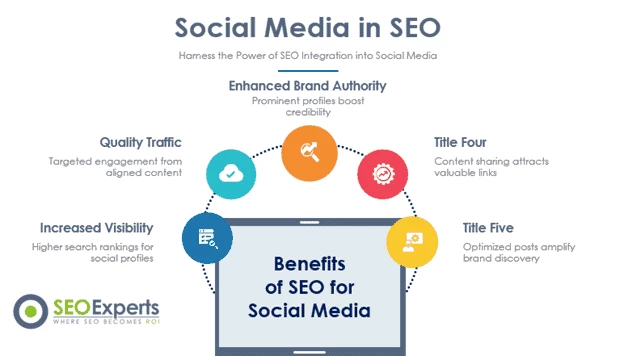
You may be thinking that SEO is an odd man out here: usually, we come across this term whenever blogs and ordinary sites are involved, not social media. Well, you’re welcome to broaden your mind: social media SEO turns the process at a different angle, making brands discoverable within socials, where users look for products, services, recommendations, and even information.
How Social Media SEO Works
All in all, social media SEO explores the same aspects as the traditional SEO you’re undoubtedly familiar with—it simply adjusts the angles and focuses on what’s important for Facebook, YouTube, Instagram, and other such platforms: the relevance and context of the content you post there. The measures that ensure the aforementioned relevance differ, but they usually center on keywords, alt text, video descriptions, hashtags, and captions. Technically, social SEO is another way to help users find content they are searching for within one platform, while distributing it to passive “bystanders” who are leisurely scrolling their feeds.
Social Media SEO vs Traditional SEO
These two strategies tend to overlap: they both rely on keyword relevance and audience intent, but it would be an overstatement to call them identical. Look here: traditional SEO improves visibility on Bing or Google by tinkering with metadata, backlinks, and technical aspects..
Social SEO, on the other hand, prioritizes discoverability within socials, search behavior, and content formats that are popular with users. Unlike its counterpart, it has nothing to do with long-term: social SEO concentrates on virality, trending, and understanding the algorithms.
Why Social Platforms Are Becoming Search Engines
The question in the title may or may not astound you—it depends on your age: if you’re a proud Zoomer, you probably don’t know how people can overlook socials while looking for information. If you’re a Millennial or older, you might be shocked to discover that TikTok and Instagram are deemed to be full-fledged search engines.
To tell you the truth, the shift is more or less natural: Google gives you “raw” information, the pieces it gleaned on other websites, while said Instagrams-TikToks-YouTubes provide an opinion—tutorials, recommendations, and product reviews that feel much more authentic and real. For example, you are packing your things for a conference somewhere in Budapest, and you want to check out local restaurants and loiter around the city. Google will give you a list of places to visit: museum this, art gallery that, a few bistros, and a couple of monuments—but a blogger who’s just returned from their trip to Hungary might share tips and debunk the myths gathering around travel costs, safety, local customs, or tourist experiences in general.
Why Social Media SEO Matters for Visibility and Traffic
Social media for SEO represents a clever approach to tried-and-tested techniques, simultaneously expanding the possibilities of the entire concept. Not only do the platforms improve performance metrics, but they also connect businesses with audiences on the sources where users already spend a lot of time. In other words, the evolution of search perfectly corresponds to the changing needs: first, people wanted to know, but now they want a validated opinion from their favorite blogger—or just any person with an established presence.
Social Media as a Discovery Tool
We summarized the advantages in the introduction, and now we want to expand and allocate enough time to each aspect of SEO on social media.
It stands to reason to cover discoverability first—a feature that pertains exclusively to socials. Although Google is still in its prime, modern users often rush to TikTok or Instagram to scroll through recommendations. While traditional engines index and crawl web pages, social platforms surface dynamic formats—reels or UGC content, which creates more opportunities for influencers who want to appear in feeds organically.
Benefits for Brands and Content Creators
Discoverability is not the only indicator that gets improved. Experts point out that general engagement, traffic generation, and audience growth are also upgraded: optimized content is easier to find and interact with, and, of course, it supports customer trust.
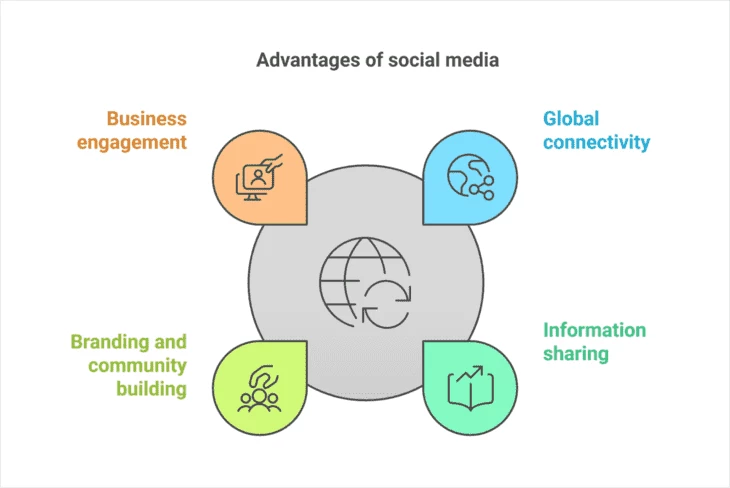
This, however, is only one side of the coin, and it mostly matters to brands. Creators, on the other hand, are drawn to monetization opportunities and community building, which is certainly possible everywhere, but easiest on social media platforms.
How Social Signals Support Traditional SEO
Although we draw a line between traditional SEO and social media SEO, we are bound to admit that social media activity still bolsters traditional performance. The correlation may not be immediately obvious, but it’s here: social engagement increases visibility, generates backlinks, drives traffic, and, eventually, enhances brand awareness.
How to Optimize Social Media Profiles for SEO
All social media profiles can be optimized for SEO, and you’re ready for the conversation—you simply need a helping hand that can steer you in the right direction. Each situation is unique, but we can give you a comprehensive set of measures to employ and update your accounts.
Use Keywords in Profile Names and Bios
Sounds like an obvious starting point, but affiliates are inclined to jump to conclusions and adjust settings that may not even need adjustment: sometimes a tiny tweak in the keyword department is just enough to turn the entire campaign upside down and hoist your visibility so high it will be seen from a window. But keep in mind that these terms cannot be updated in one spot and completely ignored in another—keywords should be optimized across your entire account, which means you ought to fix them in bios, profile names, and handles.
Add Relevant Links and Contact Information
One small step for an SEO specialist, one giant leap for optimization, a stage that is surprisingly underestimated by businesses and creators alike. When people come across your product on social media and want to get acquainted with your art or selection, they might be in the buying mood, so it is in your best interest to provide all the links and necessary information: prices, website, locations, contact details, shipping info, possible fees, etc. On the one hand, it simplifies the process: the potential customer will be able to scrutinize the details and place the order; on the other, it strengthens your credibility as a business owner, proving that you’re not some shady store that might or might not eventually send you a ceramic vase you paid for.

Optimize Profile Photos, Covers, and Branding
Speaking in the parlance of modern memes, high-res pictures are not a want but a need, and this need at some point becomes a must that defines your online presence on social media platforms. First of all, your brand must have a personality—or an identity that cannot be taken for anyone else. You can imagine the components of this outstanding online “persona”: logos, cover images, profile pictures, photos, branded visuals, and so on.
Second of all, high-resolution pictures and videos scream professionalism. You literally take time to deliver top-notch content, attract attention, and capture users. Even if they cannot buy your product for some reason, chances are they will spread the word by sharing your posts.
Maintain Consistent Branding Across Platforms
Consistency in posting normally refers to time frames, and this aspect is never excluded from the term, yet at the same time, this word describes similar patterns, designs, tone of voice, user names, and messaging. You cannot be playful and cheerful on TikTok and shift into a more rigorous personality on Facebook—it would simply feel inauthentic and suspicious, as if you’re a different brand, which has nothing to do with the funny videos posted somewhere else. In other words, you don’t have to switch between “modes”; you should simply adjust the type of content people actively interact with without altering branding elements.

Verification and Trust Signals
When you’re looking for a voice actor on Instagram, you don’t scroll through the feed to verify that they have visited a particular awards ceremony—you simply subscribe when you see a verification badge.
Works for businesses too, but verification badges in this case would be considered a mere component entangled in a more complicated system of components that make an image authentic. When customers are scrutinizing your account, they look for interactions, explore contact details, and check whether the audience—the real audience, not bots—leaves comments under your posts.
How to Optimize Social Media Content for Search
With the preliminaries covered, we can finally introduce the more practical side of this guide, where we enumerate all the vital points of a successful social media SEO tactic. Although we are inclined to advise you to go through them one by one, you can rearrange the steps in a way that fits your campaign.
Conduct Keyword Research for Social Media
Yes, keyword research, you read that right: traditional SEO no longer gatekeeps this strategy, and you’re welcome to implement it in your grand design. Nowadays, all social platforms heavily rely on keywords to understand and categorize the content people post, so it’s only logical to explore the field and take notes: which natural-language phrases are present, what questions can be used, and what topic-specific keywords should be introduced.
Write Keyword-Rich Captions and Descriptions
Point out the common keywords, and implement them into captions and descriptions to help the algorithms of the platform you’re trying to tame interpret the relevance of the content they see.
While it doesn’t seem like an ordeal worthy of Sisyphus, it poses an unexpected challenge: the titles, descriptions, and other texts, though abundant with keywords, should not look like an unnatural set of phrases plucked directly from search queries.
Use Hashtags Strategically
Albeit hashtags have recently taken a step back, giving way to other techniques, they nonetheless remain an important discovery tool for many social platforms. Just as in the case with keywords, hashtags—strategically placed in texts, of course—help connect posts to trending discussions, improve discoverability, and categorize content in general.
But there’s a hitch, too. As much as you are tempted to use a bulk of hashtags that include random but related notions within your niche (#craft, #art, #ecom, #ecommerce, #amazon, for instance), you should refrain from this impulse: overly broad and excessive hashtags will eventually get lost, and niche hashtags are too narrow to be noticed by the general public. The solution is simple: combine niche hashtags with broader industry terms and watch your numbers grow as both audiences—targeted and larger ones—frantically scroll your account, devouring insights.
Optimize Alt Text, Subtitles, and Accessibility Features
When we say that everything should be optimized, this is exactly what we mean—everything, down to the last character in alt text and subtitles. You might be curious whether we do this for the sake of the algorithm or for the sake of the user, and the answer is that both parties benefit from this approach: using alt text, platforms parse and recognize image content, and subtitles ensure that your video won’t be skipped because the user who encountered it on the feed cannot watch it with sound.
Create High-Quality and Shareable Content
People share posts for different reasons: some find a mesmerizing video at 1 am and want their friends to plunge into binge-watching (and rewatching—some reels are outright hilarious, and the comment section proves to be a gem with users even wittier than the creator), while others feel inspired by marketing endeavors and aesthetics they bump into. Either way, you hope to deserve the attention and get your fair share of shareability (pun intended).
However, when we speak about high-quality, we don’t necessarily mean 4K videos one can watch on the big screen with a pack of popcorn in hand—it’s all about the value of said content. Of course, we’re all susceptible to vibrant colors and beautiful pictures, but in the long run, it’s the value you bring to the table that matters more.
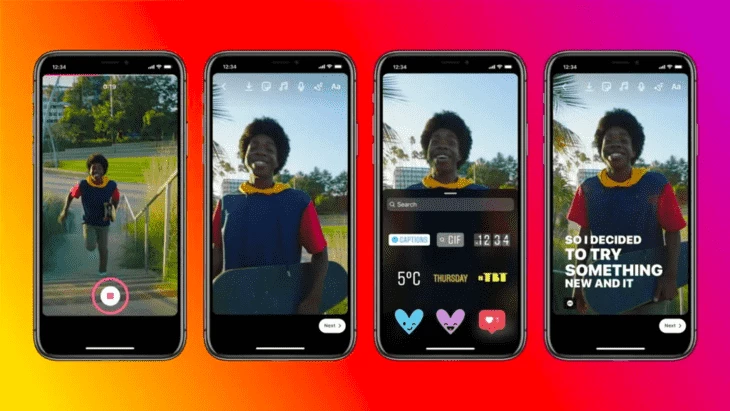
Use Short-Form Video for Better Reach
Need we be more clear? Hardly. Short videos are plaguing social platforms, for the better or for worse, and they’re remarkably effective when used correctly: they can be exhilarating or serious; they can create a general impression of the niche or provide a brief in-depth analysis; they can entice a person and convince them to take a closer look at your page, and, finally, they can display the array of your products in a more dynamic way, especially if you rely on tutorials and review types of videos.
Platform-Specific Social Media SEO Strategies
It’s nigh impossible to resist a corny simile: every search engine is unique, just like a snowflake. This, essentially, explains why there’s no one-size-fits-all: you are bound to trim your content according to the behavioral patterns of the local audience and general requirements. Evidently, we can’t cover every single social platform in existence, but we can at least focus on the most popular ones.
Facebook SEO
Depending on your experiences in the industry, Facebook may or may not be the first option that comes to mind. There are many different aspects to broach, but Facebook SEO mostly covers page information: businesses that want to enhance awareness and visibility here should supply accurate descriptions and contact information, while implementing hashtags and keywords into content.
Instagram SEO
With Instagram, another Meta product, things take an interesting turn: SEO on this platform heavily relies on keywords in usernames, not only in bios, captions, and hashtags. Although Adam Mosseri verbalized that hashtags were no longer operative on the platform, he might’ve prevaricated: it’s not that they are not needed anymore, they simply work in tow with relevant keywords.
TikTok SEO
TikTok the Predictable, the moniker we can’t but use. If you’ve ever tried scrolling the feed on the app, you can easily come up with the optimization angles for this platform—subtitles, trending topics, and keyword-rich captions immediately come to mind. By the way, TikTok algorithms can analyze both text and audio—and many other things in between, to be honest—to determine the content’s relevance and search placement.
LinkedIn SEO
LinkedIn is a social network that speaks to professionals: essentially, it’s a huge office where people prance and brandish their knowledge about industries they work in, products they promote, and phenomena that (re)surfaced in the market. Once you glean the basic details about the platform, you’ll understand what should be tweaked to draw people’s attention to you and your expertise. To achieve your goals, use industry-specific content, professional (!) keywords, relevant terms in headlines, job descriptions, and summaries, and, of course, don’t forget to resort to profile optimization.
Pinterest SEO
Pinterest is… interesting, to say the least. While it has features resembling TikTok or Instagram—you can post both images and videos—it has an idiosyncrasy that pops up whenever you think about the platform: if we’re blunt, it’s a visual search engine, which relies on keywords like nothing else. Look through the boards on the site: the titles consist of nothing but keywords: Stunning Black Halloween Nails: Trendy Designs to Elevate Your Spooky Season Style in 2025; Bohemian Mandala Lotus Flower Earring Geometric Hidden Helix Piercing Silver Color Halloween Jewelry Accessories Party Gift; 32 Dreamy Boho Witchy Bedroom Ideas for Magical Vibes… well, you get it.

YouTube SEO
Mr. Beast, one of the most renowned—or notorious, depending on your perception—YouTubers, once announced that he had spent an immeasurable amount of time conducting research on YouTube, gauging every single indicator the human mind can possibly think of: he analyzed video length, lighting, colors, virality, and other aspects that never seemed paramount. We do not intend to use his findings in this material, but this little introduction should help you grasp the importance of the smallest details in content making.
Fortuitously, YouTube optimization doesn’t deal with the minuscule. It centers on descriptions, titles, tags, captions, thumbnails, and watch time—and most of them can be updated with relevant keywords.
X (Twitter) SEO
Twitter is complicated: after Elon Musk’s escapade with buying the platform, the algorithms became even more volatile and unpredictable than before. Luckily, Twitter enthusiasts who refused to leave it for good managed to create the recipe of success, which consists of keywords, profile optimization, hashtags, and trending conversations. Bear in mind that posts on Twitter are extremely time-sensitive, so you should play with the relevance of your posts and engagement hooks.
Social Media SEO Techniques That Improve Google Rankings
Social media SEO cannot exist separately from Google: frankly, it can indirectly support your visibility on this search engine through increased traffic… But more on that below.
Embed Social Posts in Blog Content
You think embedding posts into blog articles died in 2010? No. It may not be just as popular, but this ploy diversifies your content, extends the reach of the social content, and improves user engagement, as it significantly encourages additional interactions, shares, and time spent on your page.
Repurpose Content Across Platforms
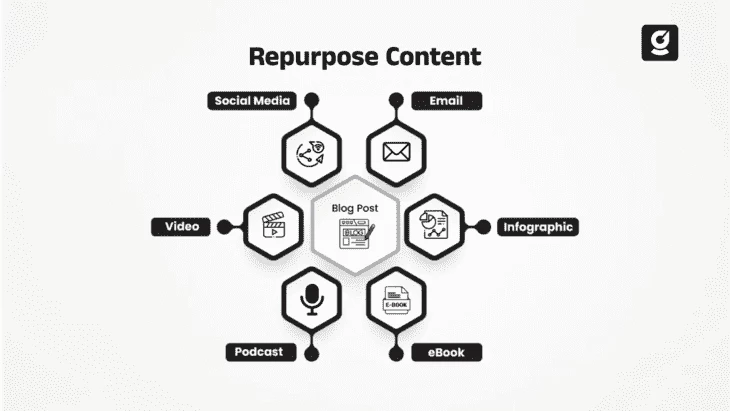
We’ve mentioned it, though briefly, and now is as good a time as any to elaborate on the subject. When we speak about repurposing, we mean, essentially, that any type of content can be altered and released once again on a different platform in a different form. For example, you’ve written a mind-blowing article for your blog, but articles aren’t in favor on TikTok or Instagram. Using that same article, you can still increase your visibility: just turn it into a reel, break it down into infographics, reformulate the message for a LinkedIn post, or sum it up in Instagram carousels and Pinterest graphics.
Cross-Promote Between Social Media and Websites
Another peculiar technique is cross-promotion, widely used practically anywhere. In regard to Google/social media SEO, however, it takes an interesting turn: cross-promotion strengthens the bond between websites and socials by driving audiences both ways—from social media to a site and vice versa. Surprisingly, it rarely interrupts the customer journey or the entire process, especially if all the links are in place and the transition between platforms is smooth.
Build Brand Mentions and Backlinks
Social visibility is a surefire way to success: the more people know about you and your brand, the more your online presence expands, and the greater your overall digital authority is. When content performs well across social media platforms, it increases the chances of generating brand mentions, shares, engagement, and valuable backlink opportunities. High-performing social content is more likely to be discovered and referenced by bloggers, influencers, and other content makers, which only reinforces the brand’s credibility and public trust.
Advanced Social Media SEO Strategies
Aspiring affiliates have had their fair share of tips, and now we can safely segue to a more complicated phase, which will focus on AI, content hubs, and collaborations.
Optimize for Voice and AI Search
AI-powered search and voice assistants are no longer a figment of imagination generated by a sci-fi writer on acid. We use them regularly, sometimes not fully realizing how important these features have become.
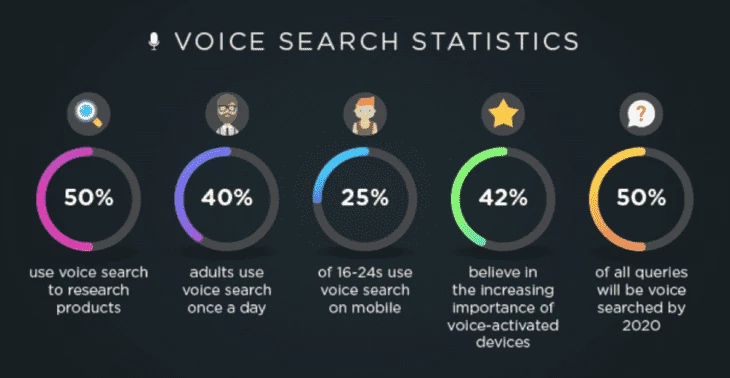
Consequently, SEO has to adapt and reflect these changes. As users search for information using full questions and natural language phrases instead of short keywords, SEO specialists adjust titles, captions, scripts, and descriptions in a way that answers common audience queries: generally longer and more conversational.
Use AI Tools for Social SEO Optimization
AI tools are in great abundance nowadays, and if you want to skip certain stages, automate processes, or delegate the most repetitive and annoying tasks, you can resort to AI. While not everything can be assigned to artificial intelligence, content optimization, performance analysis, and keyword research are certainly safe areas where AI tools can shine without affecting quality or authenticity.
Build Topical Content Hubs
Topical content hubs are another ploy often overlooked by people trying to establish their reputation on social media platforms. Instead of publishing disconnected posts that are not related to the brand’s products or services, brand representatives can twist things around and organize content around core themes correlated with their industry expertise (or services and products).
Collaborate With Influencers and Creators
If you have an opportunity to collaborate with an influencer or creator, especially with a solid follower count, seize it and don’t think twice: this is your easy way to increase engagement and reach. Partnerships like this expose brands to larger audiences, simultaneously improving trust: people see that their favorite blogger uses a tool manufactured by a particular brand, and they believe that this brand is worth testing—essentially, worth buying.
Common Social Media SEO Mistakes to Avoid
You can learn through your own mistakes—or you can avoid completely, saving time and money in the process.
Ignoring Keywords in Captions and Profiles
The most common mistake in social media SEO is negligence when it comes to keywords. Affiliates either feel reluctant to use them in bios, usernames, and descriptions, or simply forget that this is a necessary step that immediately affects visibility and reach—without keywords, no content will appear in search results.
Overusing Hashtags
Hashtags define discoverability, it’s true, but you shouldn’t go overboard with them: first of all, even the most coherent texts interspersed with hashtags may seem spammy and/or totally unreadable; and, second, the algorithm itself may be confused, failing to pinpoint the primary topic of your post.
Posting Low-Quality or Inconsistent Content
We’ve broached consistency and quality a few times throughout the article, but the importance of these two components cannot be emphasized enough. Yes, in certain cases, low-quality content has a viral effect, but not the type you would want—people find it absurd and preposterous, mocking such posts on their socials and unsubscribing from a brand that delivers them. By contrast, consistent high-quality content may go viral among your target audiences who will end up praising your outstanding skills and expertise.
Not Tracking Analytics and Performance
Not all analytics is exciting: some patterns are easier to uncover, others require deep knowledge of how campaign components correspond and interact with one another, but, alas, this is an important step that cannot be skipped or even delegated. You should closely monitor your performance metrics to identify trends and react proactively in case you see a change you don’t like.
Conclusion
Although social media SEO is a relatively new technique, it has quickly become an essential part of digital marketing, as it reflects the shift in search behavior. Nowadays, people not only rely on search engines—they glean information on social media, and optimization on such platforms can improve visibility and awareness within and outside your target audiences.
FAQ