Traffic Cardinal
wrote May 18, 2026
Traffic Cardinal
wrote May 18, 2026
Traffic Cardinal
wrote May 18, 2026
Traffic Cardinal
wrote May 18, 2026
If you were a Tumblr kid back in the day, you can remember the hype and aesthetics: bizarre color combinations, (N)SFW content with your favorite characters, roleplaying, art works, fanfics, Sims mods—it seemed so surprisingly naive and yet charming that it was impossible to resist, so you eventually yielded and joined communities.
Modern people don’t treat Tumblr with the same respect we did—they have their own toys, and these toys come with unexpected benefits: you won’t believe the number of queries containing keywords like “Pinterest affiliate marketing”. We are mentioning it for a reason because Pinterest has become a fresh moneymaking prospect.
What Is Pinterest Affiliate Marketing?
Before we bring up a Pinterest affiliate program or broach related fields, we, with the reverence of a person who adores the platform, want to clarify the process with a few brushstrokes.
Technically, it isn’t any different from what you’re already accustomed to: affiliates use Pinterest as a platform where they can promote their products and services by means of affiliate links. When users click pins—an apt name for local posts—and complete a purchase, affiliates earn their commission from retailers or affiliate programs.
As for affiliate links, they can either direct users straight to a merchant’s product page or send them to a blog post or landing page that contains affiliate recommendations. At the same time, Pinterest does not ban direct affiliate links, so you can earn commissions without owning a site.
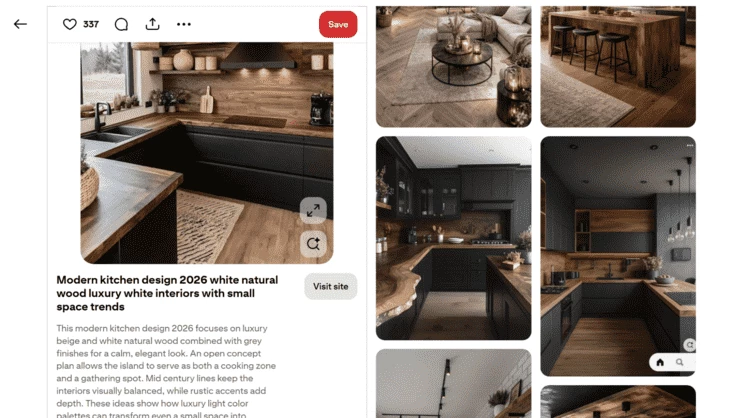
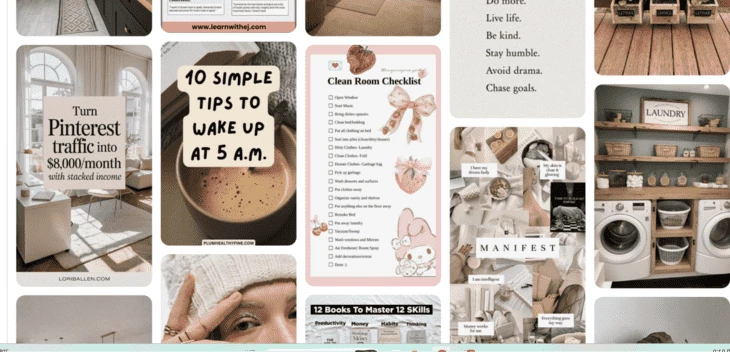
Now, meet the pins!.. It’s not a secret that people on Pinterest are seeking inspiration, and, as a result, they’re drawn to aesthetically pleasing pictures. Consider this sentence an innuendo you won’t encounter anywhere else: your pins must match search behavior, remaining visually appealing to users!.. And don’t forget the keyword-rich titles. More on that below, but here are the examples:
Modern kitchen design 2026 white natural wood luxury white interiors with small space trends
Morning Routine Checklist
7 Books to Master 7 Skills
…etc, etc, etc.
Why Use Pinterest for Affiliate Marketing?
Affiliate marketing on Pinterest is a topic that has been discussed on the internet for the last few years, and, frankly, its popularity is growing exponentially— for a reason.
First of all, Pinterest users visit the site with a plan in mind: they are already looking for ideas, and they’re more likely to buy a product that appeals to them visually.
But this point alone would be too obvious to focus on—this platform is far more versatile than you probably think. Unlike posts on other sites, Pinterest content boasts a surprisingly long lifespan, especially compared to the notorious TikTok and Instagram, where videos disappear without even being noticed. Pins, in contrast, continue generating traffic for months, if not years, as they appear in search and as recommendations.
At the same time, it would be highly unwise—and perhaps unfair—to compare Pinterest to solely TikTok and Instagram while the market is abrim with other competitors. And yes, you’ll like what you’ll see because:
- Success on Pinterest depends on keyword optimization, not follower base.
- Users don’t need to be convinced—as a rule, they’re already in a buying mood.
- The content doesn’t disappear from feeds and can be found whenever needed.
- Pins are SEO-driven and searchable.
- Organic traffic opportunities are strong.
How Pinterest Affiliate Marketing Works
How to do affiliate marketing on Pinterest? If you’re armed with the basic knowledge of the platform, consider yourself eligible; if you’re in the process of getting acquainted with Pinterest, well, you’d better read the article and push a few buttons on the site to understand how it works and what recommendations pop up first.
So, the first thing you should acknowledge is that users discover content on Pinterest via different routes: some scroll their feed until they see something that attracts their attention; others type a query into the search bar and examine the results; then, there are related pins, and category browsing. The platform’s recommendation system works as follows: it pulls out the pins based on relevance, user interest, engagement, and, of course, keywords.
It doesn’t mean that Pinterest is devoid of algorithms at play. They exist, and yes, they do influence the outcome, though it doesn’t happen quite the same way as on other platforms. In this case, the algo distributes content via analytics: it defines how relevant your keywords are and how topics match search intent; additionally, it gauges pin quality, engagement, and user interaction history, so Pinterest is not purely luck-based—you need to invest in keyword optimization to achieve desired results.
Now that you are familiar with the process (hopefully, you browsed Pinterest to see how the system operates in reality), please stop a moment for a brief explanation on how clicks can be turned into leads, and, correspondingly, commissions. In point of fact, there’s nothing particularly intricate about the entire thing: when users click a pin, they get redirected to a landing page, product page, or a blog post that contains affiliate recommendations. The rest is predictable: once the purchase is completed, the affiliate marketer receives their commission through the affiliate program’s unique referral URL.
What You Need Before Starting Pinterest Affiliate Marketing
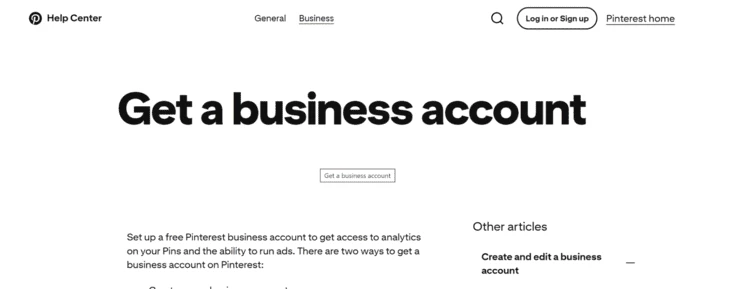
If you’ve been wondering how to use Pinterest for affiliate marketing, this is what you should do first: set up a business account, which will give you access to keyword insights, analytics, and other features that can help you optimize performance. As usual, approximately at this stage, you’re supposed to choose the niche you want to develop: eCommerce tools, fashion, home decor, print-on-demand products, beauty, DIY projects, or fitness.
Again, the rest is obvious: just like with other platforms, you should check out the policies, guidelines, and disclosure requirements. As a rule, Pinterest points out that creators must refrain from spammy behavior, must not duplicate content, and must not resort to misleading practices. At the same time, affiliates should clearly disclose sponsored and affiliate relationships.
How to Start Affiliate Marketing on Pinterest (Step-by-Step)
Mission: affiliate marketing Pinterest. Equipment: computer, knowledge, and the power of brain cells. Result: unbelievably coherent Pinterest campaign. Read on to dive in!
Step 1: Create and Optimize a Pinterest Business Account
Affiliate marketing with Pinterest is an endeavor that requires a powerful creative streak and a sense of beauty—or a gut feeling that reacts to aesthetically pleasing pictures the way users would, but that should be postponed because, as we have already said, your first step is to set up a business account with access to advertising tools, various insights, analytics, and Pinterest trends.
But even the most professional profile needs trimming. It’s fairly simple here: all you need to do is adopt a niche-focused username, add a profile image that corresponds with your vertical, write a keyword-rich bio, and create a few boards related to your business.
Step 2: Choose a Niche and Research Pinterest Keywords
You’ve just started your journey, congratulations! You may or may not have had a few ideas regarding the niches on Pinterest, and you have every right to stick with your initial choice, but we’d love to give you a list containing the most popular niches: productivity, fashion, recipes, home decor, crafts & DIY, beauty, and fitness. You can certainly scroll through the boards to get acquainted with the subjects and adjust your own preferences.
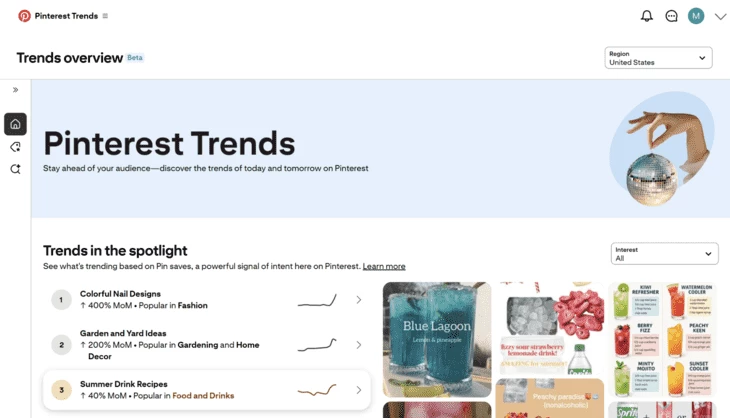
Then you can finally segue to keyword search, a step slightly more complicated than the niche choice. As Pinterest operates like a visual search engine, you should focus on search suggestions and power up Pinterest Trends to identify the most popular keywords included in profile descriptions, pin titles, and descriptions, and, consequently, in board names.
Step 3: Join Affiliate Programs or Affiliate Networks
Best affiliate programs for Pinterest? Coming right up, they are your third step—them or affiliate networks, depending on your preferences. Either way, both options provide referral links, the sort that will help you track commissions and purchases.
What’s the difference between affiliate programs and affiliate networks? Mainly the size: brand affiliate programs imply that you will promote one particular merchant, while affiliate networks will connect you with multiple service/product providers. Usually, such programs are free to join and give access to tracking dashboards and promotional materials, which, in this particular case, should be exceptionally appealing visually.
Step 4: Create Pins With Affiliate Links
Pinterest for affiliate marketing is a plethora of opportunities, and you’re about to make this discovery yourself: once you learn how pins work and where to put your affiliate links, you’ll fully acknowledge the platform’s potential.
As you may have concluded, pins are the main content format on Pinterest, and they are known for their strong visuals and clear messaging—users do not scroll through tons and tons of pins searching for universal truths worthy of Kant and Hegel; they want their problems solved and their home decor instagrammable (or Pinterest-able). In other words, your posts—pins—should contain your affiliate link and look as appealing as possible. Evidently, it’s hard to give the right recipe but here’s what an ordinary user would consider “appealing”:
High-quality visuals.
Vertical image.
Readable text.
Clear CTAs.
Step 5: Publish and Optimize Your Pins for SEO
No, the SEO optimization paragraph cannot be skipped: this is exactly the factor that plays a major role and defines the frequency with which your pins appear in recommendations and/or search results. As a rule, SEO optimization implies a multifaceted, complex approach, which cannot center on the simple use of keywords in titles and descriptions. If we were to write a guide dedicated to the topic, we’d include the following steps (of course, they should be extrapolated across your entire profile, not just individual pins):
- Whenever appropriate, add relevant hashtags.
- Write descriptive board titles (with keywords!).
- Organize random and not-so-random pins into niche-specific, coherent boards.
- Use consistent branding to help the algorithm distribute your content.
Step 6: Post Consistently and Schedule Pins
If you have ever read our articles, you may have noted our obsession with consistency. Sorry to break it to you, but it will happen again—Pinterest also relies on this particular metric… if it can be called a metric.
While it may be more convenient to load a bunch of pins and forget about your boards for a week, this approach absolutely won’t do: it’s better to switch to smaller but more regular amounts of content. Perhaps, creating a schedule is a smart move…
Step 7: Track Performance and Optimize Results
Those who hoped to jump to the earning part must be sad to admit that money won’t come without tracking: essentially, tracking and refinement are the nature of the industry. Frankly, tracking is an integral part of affiliate marketing on Pinterest for beginners, and this is how you learn to adjust your campaign. The analytical dashboard shows you which pins are popular and which flop; breaks down impressions and saves, clarifies engagement metrics, and identifies top-performing pins you can use for further campaigns. In other words, treat it as a stepping stone—or a movie with a plot you can twist the best way to attract new audiences and solidify the older ones.
Pinterest Affiliate Marketing Tips for Higher Earnings
If you’ve been scrolling your feed, wondering how to affiliate market on Pinterest, this is your stop. We decided to draw up a list of useful tips to elevate your campaign and embolden you to try new techniques.
Create Multiple Pins for Each Affiliate Product
A surplus of pins is not always bad: sometimes using Pinterest for affiliate marketing includes a little excessiveness, which turns things to your advantage and helps you improve your product in search results. Besides, the more pins you make, the higher the chance that at least one of them will reach the right—or the new—audience, which will be eager to examine the selection of products on your website or blog. At the same time, different posts give more space for keywords: try new combinations, catchier titles, different color schemes, concise CTAs, and… well, see where magic happens.
Use High-Converting Pin Designs
The first few moments on Pinterest bestow an ancient knowledge on you: this is the platform where visual aesthetics plays a significant part and where designs do affect overall performance. In other words, you should stick to an unwritten set of criteria that defines what is appealing and what isn’t. Yes, we have consulted a designer to make the unwritten set of criteria written, and the Almanac of Pinterest Design now says that high-converting pins have:
Simple layouts.
Easy-to-read text.
Vertical formatting.
Clear visuals.
Optimize Titles and Descriptions With Keywords
This is where you start and this is where you return: keyword optimization may not be the only integral part of a successful Pinterest campaign, but this is still important enough to mention it again. Examine your entire profile and add keywords everywhere you can: in your profile content, pin titles and descriptions, and, of course, board names.
Use Group Boards and Communities
If you’re new to the platform, you’ve never heard of the unique phenomenon of group boards, but if you’ve been there and watched Pinterest grow, you know everything about it. Not sure which category you belong in, so, in order to make sure we’re on the same page, here’s the definition: group boards are shared boards where multiple users can save their pins and contribute them to the same audience. Fandomheads who favor a particular ship often create such boards to play around the pairing of choice, but affiliates can explore other possibilities: expand reach, grow visibility, and increase engagement.
Promote High-Performing Pins
We may or may not have mentioned that certain pins can drive engagement for months, if not years. Yes, you can crank out new pins and post them regularly according to your previously adopted schedule, but sometimes it’s either tricky or counterproductive: why not double down on the posts that have already unleashed their potential?
Now, you might be curious as to what this ‘doubling down’ includes. Usually, we’d focus on testing keywords, but, apparently, there’s something else to it—republishing updated versions (with different color schemes, titles, and text layouts) or sharing across multiple boards at a time. Then, you can try running Pinterest ads to make your results even more astonishing.
Build an Email List From Pinterest Traffic
While looking for decent Pinterest affiliate marketing examples, aspiring affiliates often overlook one peculiar feature not many know about—an email list. Virtually, this is the place where affiliate marketing morphs into email marketing, and it is not a less ludicrous option: it just requires a wittier approach. The idea is that you don’t immediately send users to the product page where they can proceed to checkout—you redirect people to a blog post or landing page where they can subscribe to your newsletter before actually purchasing your product.
We won’t lie, it might be a little more complex than a straightforward purchase, but it pays off tenfold: this is how you can keep nurturing your customers even after they leave Pinterest. You know how it works nowadays: a person sees an intriguing pin and clicks the link, but they aren’t ready to buy just yet—and the moment’s lost, ADHD strikes in, and the user never comes back. With emails, however, it doesn’t happen: affiliates are in touch with their (potential) customers via recommendations, promotions, and newsletters, and buyers, who feel more trust and confidence in the brand, may feel inclined to purchase your product at first opportunity.
Best Affiliate Programs for Pinterest
Now that you know how to post affiliate links on Pinterest, create noticeable pins, and monitor user activity, we can gradually switch to the most interesting topic of all. Affiliate programs.
Affiliate Networks You Can Use
The choice is up to you, and the market abounds in affiliate programs majoring in Pinterest, but we have our top picks, whose brilliant reputation and endless opportunities can help you earn money in any niche you like—home decor, fashion, lifestyle, beauty, or anything else entirely.
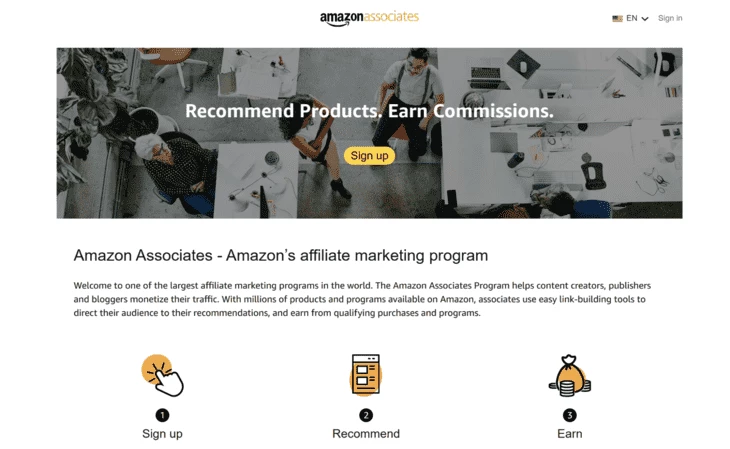
Number one on the list is, of course, Amazon Associates, the affiliate giant that allows webmasters to promote millions (!) of products in nearly any imaginable category. In all honesty, it shouldn’t come as a big surprise, as Pinterest often serves as a discovery platform where users seek inspiration, and affiliates partnering with Amazon Associates can bring this inspiration to life in the shape of a real item in a cozy home.
Then there’s ShareASale—not as popular as the previous option, but it’s worthy of your attention and a few moments of your time. This affiliate network connects creators with merchants across various industries: you can find opportunities within eCommerce, software, lifestyle, digital products, and successfully develop in these niches.

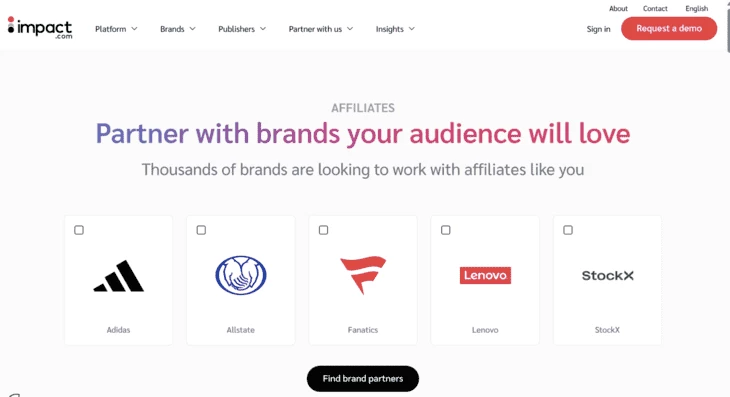
Impact should take third place on the list, not because it’s inferior to the abovementioned, but because it’s commonly used by larger brands, not aspiring affiliates. And there’s a reason for that: those who only start their journey in affiliate marketing may not need the advanced tracking and partnership tools Impact provides. Seasoned webmasters, however, may only benefit from additional tracking features implemented into the program.
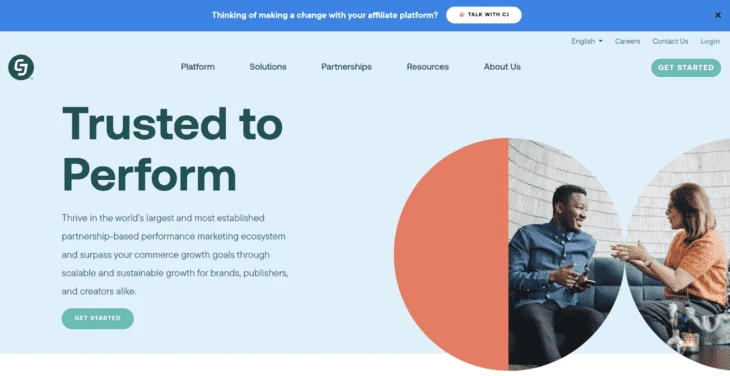
CJ Affiliate expands the list of partnerships: using this affiliate program, you can try your luck in home, retail, technology, travel, and finance categories. But the rule of thumb remains the same: you shouldn’t limit yourself to one affiliate program or network—sometimes it’s wiser to diversify than rely on one program.
How to Choose the Right Affiliate Programs
Driving sales is a task that might seem an ordeal if you’re new to the niche and barely understand what’s happening in the business. At the same time, the right affiliate program may relieve you of the most excruciating duties, leaving space for creativity and wit. Technically, the right program is the foundation of success, and you should scrutinize the options before you throw yourself headfirst into the business.
So, what factors should affiliates consider when choosing affiliate programs? It only stands to reason that one of the most important aspects is the commission rate—too low, and it’s not worth the trouble; too high, and it’s suspicious. The second factor is cookie duration, which is especially important on Pinterest. The thing is that users there rarely buy immediately after clicking a pin—don’t forget that Pinterest is a discovery platform where people save ideas and compare options to return later, days or even weeks after thorough examination of options and contemplation. Cookie duration determines how long the affiliate program will track that user after they click your link. For example, if an affiliate program has a 24-hour cookie duration, you only earn a commission if the user buys within one day of clicking your pin. If the program has a 30-day or 90-day cookie duration, you can still receive credit even if the purchase happens much later.
Other important factors are conversion potential, product relevance, brand reputation, and, of course, visual appeal, but these details are self-explanatory and do not require additional clarification.
Useful Tools for Pinterest Affiliate Marketing
Although the general pattern must be more or less clear, there are a few tools that can brighten up your performance metrics and simplify the processes.
Pinterest Analytics
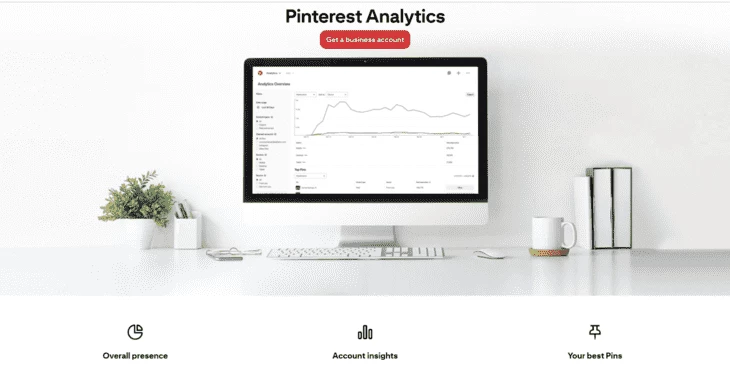
Do not skip the analytics day!.. And don’t overlook the analytics features: Pinterest Analytics is the sort of tool that can help you understand which pins go through the roof, which flop, which generate most impressions, which deliver clicks, and which are regularly saved by users. There’s not much to say: tracking Pinterest data helps you determine what type of content your audience wants to see and what performs best.
Pinterest Trends
Your keyword friend is at the ready!.. Well, not only that: Pinterest Trends can help you with trending searches and seasonal topics within your niche. Since Pinterest functions more like a search engine than a traditional social media platform, you need to understand what users are looking for to create content with higher visibility.
Canva
Oh yes, call it your personal designer! Although this is not a free tool, the free options are enough to deliver professional-looking graphics, templates, infographics, and vertical pins optimized for Pinterest’s layout.
Tailwind
Speak about useful tools… and Tailwind is the first that comes to mind.
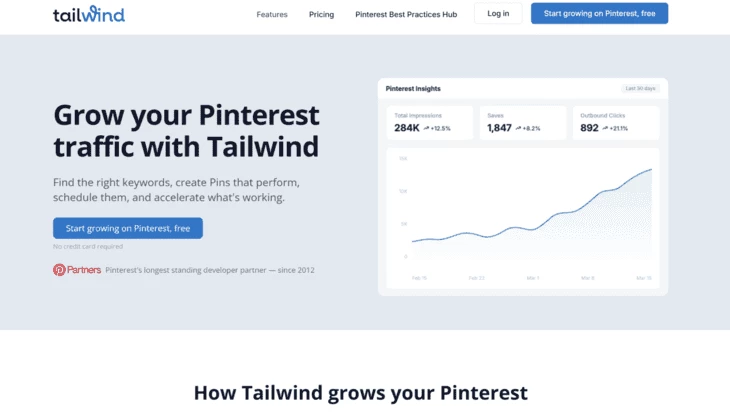
Tailwind is a scheduling and automation tool designed specifically for Pinterest and Instagram marketing, and it helps with the schedules we have mentioned earlier. Yes, we’re bringing this up for the sake of consistency. As you may have noticed, we are advocating for consistency whenever we can—but only because Pinterest rewards active accounts.
CapCut
Short videos? Yes! Such pins exist, and while it’s hard to say what’s popular—videos or static pins—we advise you to give it a shot. Video content, no matter where it’s posted, tends to attract more engagement, as it showcases products in a more dynamic way.
How Much Money Can You Make With Pinterest Affiliate Marketing?
This question is so common that we’re bound to split it into several stages and cover each.
Beginner Earnings (0–6 Months)
Alas, most beginners earn little to no income (or no income at all), but this isn’t Pinterest to blame: these greenhorns are building their content, learning the basics, or navigating SEO. In other words, the commissions are irregular and small, ranging from $50 to $500 per month.
Growing Accounts (6–18 Months)
As accounts gain more viewers and keyword-optimized pins begin ranking in search results, earnings increase correspondingly. Predict the predictable: commissions grow too, and the previous $500 become the starting point.
In general, growing creators earn between $500 and $3,000 per month.
Established Accounts (18+ Months)
Established Pinterest accounts with large libraries of evergreen content can earn several thousand dollars on a monthly basis, and many such accounts diversify their income, combining affiliate marketing with email marketing, digital products, or blogs.
Factors That Affect Your Earnings
To tell you the truth, anything can influence your earnings, and it’s not unique for Pinterest: similar aspects may affect your income on other platforms. Usually, the results heavily depend on the niche and audience demand (if you choose something rare, say, antiquities against home decor, it’s obvious that you’ll be in a much more delicate position); the quality and design of your pins (yes, people browse Pinterest to scroll through beautiful pictures and fantasize about a stained glass they will never get to create); consistency; SEO, commission rates, cookie duration, and, of course, seasonal trends—it’s hardly possible that people begin to look for Halloween costume inspiration in the middle of May.
Common Mistakes in Pinterest Affiliate Marketing
Affiliates working with Pinterest tend to make one huge mistake by posting promotional pins and nothing else besides them: not only does it look suspicious and spammy, but they undermine trust with both users and algorithms you’re trying to win over. Yes, you want your impressions and saves, but why not relent and become The Usere for a change? Add an educational pin here, post an inspirational one there, sprinkle the affiliate endeavors with a few problem-solving pins, and you’re good to go.
This, however, isn’t the only blunder webmasters make on their way to success: many dismiss Pinterest SEO as an unnecessary technique, while in reality, it helps promote your pins. Pinterest is a visual search engine, so keywords enhance the visibility of your pins, while a lack thereof can only depress the results.
Conclusion
Who would’ve thought that Pinterest could be a perfect platform for moneymaking? Yes, it’s still about aesthetics, refined tastes, and beautiful pictures, but nowadays it also serves as a great passive income prospect—if you manage to employ the aesthetics, refinement, and beauty and couple them with consistency, strong design, and keyword optimization.
FAQ