Traffic Cardinal
wrote June 03, 2026
Traffic Cardinal
wrote June 03, 2026
Traffic Cardinal
wrote June 03, 2026
Traffic Cardinal
wrote June 03, 2026
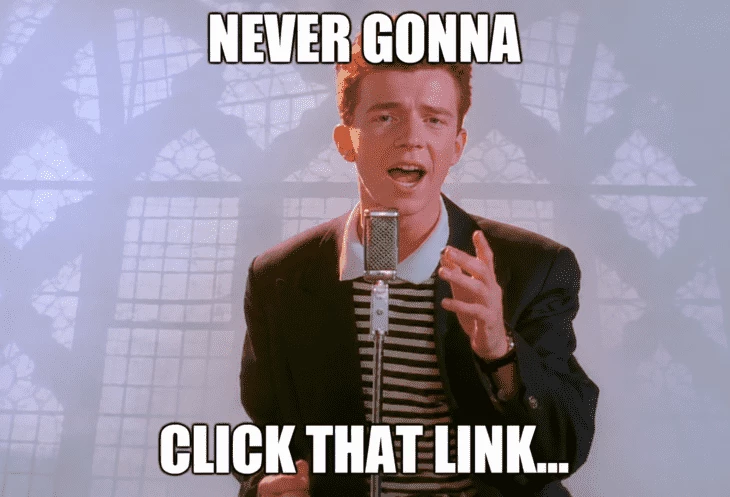
For those who didn’t know, let us fill you in: there’s this genre of internet entertainment where creators find a suspicious ad, click it, follow the trail, order whatever miracle object is being sold and then unbox it on camera as enthusiastically as a raccoon approaching an open trash can. Those items are usually a total gamble: clothes looking like they were sewn during an earthquake, “revolutionary” gadgets doing basically nothing or face creams with the confidence of a medical breakthrough and the credibility of a basement receipt.
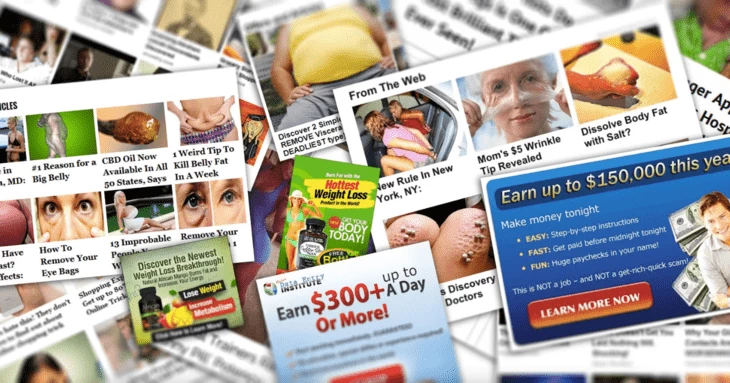
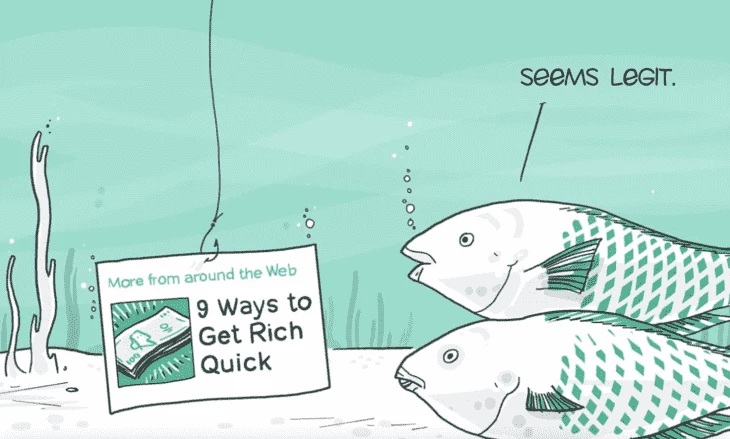
And what does this have to do with us, you are probably asking? Well, if we drop the sugarcoating, the truth is sometimes the ad being laughed at is not promoting an obvious scam. Plenty of legitimate affiliate offers can still pick up scam vibes from a questionable headline, greasy-looking visuals or mathematically illegal discounts (or maybe the whole set). Sure, clicks are clicks. Until, of course, one of your ads becomes someone’s “I tested the sketchiest ads online” episode. Not so tempting anymore, is it? Then, let’s talk about red flags signalling that an ad is sketchy, what scares off real buyers and how to “un-sketch” your creatives so that the offers you promote don’t fall victim to public ridicule.
Why Your Ad Feels Off
Let’s play a quick game. Bend one finger for every sign below you’ve seen online. Bend another if you’ve used it in your own campaign. No side-eyes, you are in a safe space.
Miracle claims. It’s funny how that works, but the more the ad begs to be believed, the less believable it feels:
“Doctors hate this one simple trick”
“Banks don’t want you to know this”
“Make $1000 a day from your phone”
“Lose weight overnight”
“This hack shocked experts”
“A secret formula celebrities use”
Fake urgency. If the same countdown timer survives multiple page refreshes, users notice:
“This deal won’t be available again”
“Claim before it’s gone”
“Almost sold out”
“Only 3 left”
“Offer expires in 5 minutes”
“Last chance today”
Sloppy visuals. Your creatives don’t have to look expensive, but they at least have to look like a human (preferably, a pro) made them on purpose. Because scammy has a long history of being ugly and users remember that. Signs include:
Pixelated or blurry images;
Random red arrows and circles;
Chaotic collages;
Too many fonts at once;
Fake app screenshots;
Suspicious before / after shots;
AI-generated faces with dead eyes.
Fake-looking people. Speaking about faces – users won’t fall for trust props instead of real people:
Nameless “doctors” in lab coats;
Fake experts pointing at unreadable charts;
Too-polished “real customers”;
Stock-photo families;
Influencers who clearly never used the product;
Testimonials with tiny cropped profile photos.
Impossible discounts. A ridiculous deal naturally raises the question: what’s the catch? The classics:
“Was $499, now $19.99”
“90% off today only”
“Buy 1, get 5 for free”
“Free, just pay shipping”
“Luxury quality for $7”
“Exclusive warehouse clearance”
Product hide-and-seek. Some ads hide the product so hard that the user has to click just to learn the category. You’ll probably say “any port in a storm”, but too much mystery usually makes users feel manipulated. Common hooks are:
“This device is changing everything”
“People are obsessed with this tool”
“This new solution went viral”
“A simple way to fix your daily routine”
“This method helped thousands”
“You won’t believe what it does”
Shady landing pages. A landing page should make the offer clearer and answer doubts instead of adding new ones with every scroll:
Unclear brand;
No decent product explanation;
No refund and shipping info;
No contact details;
CTA buttons every three lines;
Endless pop-ups.

Fake social proof. Bad proof is worse than no proof, so watch for:
First-name-only reviews;
Anonymous “verified buyers”;
Perfect ratings everywhere;
Unsupported “thousands of happy customers”;
Comment screenshots with no source;
Vague expert quotes;
Celebrity-ish wording without a real endorsement.
Funnel mismatch. There’s nothing worse for a customer's perception than the ad, landing page, final offer and checkout looking like they don’t belong to the same campaign. For example:
Different promise after the click;
Change of tone;
Price or conditions appear too late;
The checkout brand doesn’t match the ad brand;
The main offer gets buried under upsells;
Design inconsistencies (e.g. cool creatives, but an old-school sales page).
Now, if you bent a few fingers for your own campaigns, it’s okay. Performance marketing does things to people. At times you think you are just testing angles when in reality you accidentally recreate the visual language of a phishing attempt. Although the above-mentioned tricks were stigmatised by us as red flags, we can’t deny that such ads attract attention. But you already know which kind. So let’s try to reverse this curse, shall we?
Making Your Ads Clickable For The Right Reason
Good news is you won’t need an intervention from a whole team of pros to fix your ads. But we don’t suggest using a flat beige colour palette and headlines with the emotional range of a teaspoon either. Naturally, your ads still can’t do without hooks, tension, curiosity and reasons to click. However, wanting to click because the offer looks useful, clear and worth checking out is much better than wanting to see how deep the rabbit hole of nonsense goes, right?
What to tweak:
Show the offer earlier so that users don’t have to go through decoding what you are selling. It’s one thing to tease the benefit with the ad, but classifying the product category – that’s where we draw the line.
There should be a good balance between being not too polished, not too salesy and not too obviously staged for the ad to look natural in the feed. Natural needs structure, though. The product should be visible, the message should be readable and the visual shouldn’t look like it was recycled from ten other campaigns.
Put the product in a believable context, where it’s used by a person who looks like they might exist outside stock photos. Just enough reality for the user’s brain to unclench, instead of a miracle object floating on a bright background.
Save the fiction and don’t make your ad promise users secret hacks, overnight results and wealth from earning money on their phones. That will only trigger their suspicion alarm. Smarter wording is waiting for you in the table below, don’t miss it!
- Before pushing people toward the CTA, let your landing page answer the basic questions they already have:
— who is behind this;
— what exactly is being sold;
— what happens after the click;
— what it costs;
— what the conditions are;
— how delivery or access works;
what happens when something goes wrong.
Proof should come or at least look like it came from real life. Which one would you personally be more likely to trust: a review with texture or a perfect five-star wall from a suspiciously cheerful stranger? Thought so.
People hate being shoved, that’s why urgency should only be used to clarify things. If there’s a real reason to act now, make it visible: stock, promo dates, launch pricing, seasonal availability, bonus access or delivery cutoff. The point is, make it clear that you're rushing them for their own good, not to pocket commissions as fast as possible.
Sketchy Wording | Better Wording |
“Doctors hate this one simple trick” | “A simple way to compare common options before choosing a treatment” |
“This $5 gadget is making electricians furious” | “A compact cable tester for small home repairs, let’s see what it can and can’t do” |
“Earn thousands a day from your phone” | “A beginner-friendly app for tracking freelance tasks and payouts” |
“Lose belly fat overnight with this secret method” | “A meal-planning tool with calorie tracking and weekly progress” |
“Banks don’t want you to know about this app” | “Compare fees, limits and transfer options in one place” |
“Luxury skincare for $4.99. Today only!” | “A budget skincare set with clear ingredients and return policy” |
“This tiny device changed everything” | “A portable posture reminder for desk workers. Not magical, but useful” |
“Only 3 left! The offer expires in an hour!” | “Limited batch available until… (date)” |
“Top media about us:…” | “Featured in … (source) for … (reason)” + attach the link |
“Thousands are obsessed with this viral product” | “Rated by 100 customers” + add reviews (filter them by use case and rating) |
Conclusion
So before your ad goes live, give it one last look through the eyes of a suspicious scroller. Is the offer clear? Does the proof feel real? Does the landing page look like there’s a business behind it? If yes, congratulations: you may survive the sketchy ad test and keep your offer out of someone’s cringe-content review.