Traffic Cardinal
wrote March 13, 2026
Traffic Cardinal
wrote March 13, 2026
Traffic Cardinal
wrote March 13, 2026
Traffic Cardinal
wrote March 13, 2026
Blogging. Website posting. Analytics. Services, products, commissions, collaborations, ads, funnel refinement — sounds like a bunch of terms plucked out of a management textbook written several years ago, when such words had a magical flair around them, creating a realm of unknown mystery you wanted to pry into.
Now they are all familiar and pose no inconvenience, but it is the connection between them that might confound a novice who’s heard about affiliate marketing: where to start? What to track? How to optimize and adjust the settings? What is retargeting, and is it necessary?..
Luckily, you’ve just found an instructor.
What Is Affiliate Marketing
“What is affiliate marketing? How does it work? Have I ever encountered it in real life? Is it a common thing?” This is probably a classic way for people to discover the entire field. To save you some time, we decided to start with the basics and add some flesh to the carcass later on.
Affiliate marketing definition
What is affiliate marketing and how it works is a decent way to start a paragraph covering the definition. As much as we want to digress and dwell on the history of this digital phenomenon, we’ll keep it short.
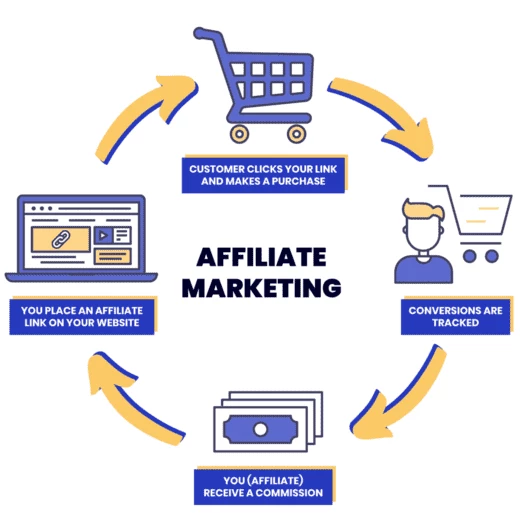
Affiliate marketing is a performance-based marketing model in which individuals or companies earn a reward for driving traffic to another company’s offerings. In other words, it’s a partnership where brands compensate a third party for measurable results.
Affiliate marketing examples
How does affiliate marketing work? No need to engage in the textbook talk when you have an illustrative example: remember your favorite influencer on YouTube or Instagram — they must’ve shared an opinion on a product — on a hair care set, makeup kit, branded items, sportswear, yoga mat, sneakers, or anything else that comes to mind. So, this talking head describes the advantages of the merchandise in the PR box and mentions that you can obtain just the same thing for half the price — here are the convenient links and the discount code! What the bloggers do not tell you is that they will receive a percentage from every purchase. Voilà, that’s your affiliate marketing at its finest.
Affiliate marketing vs referral marketing
While affiliate marketing and referral marketing resemble each other, they are not identical — there’s a small but significant difference.
Affiliate marketing centers on formal partnerships, tracked links, structured programs and commissions, whereas referral marketing tends to work within the realm of personal networks, essentially implying that existing customers will be rewarded for inviting their friends and followers.
How Affiliate Marketing Works
Actually, it’s time to reveal the secret hidden behind the curtain. Again, in order to keep the size and the length of the article in check, we break down the complicated subject into several clear stages.
Key participants in affiliate marketing
Affiliate marketing typically centers around three core parties: the seller (or the owner of the products or services), the affiliate (also often called the publisher), and the final consumer, who purchases said product or completes the desired — targeted — action.
The seller, aptly dubbed the merchant or advertiser, provides physical or digital products: tools, online courses, clothes, cosmetics, dietary supplements, etc. Essentially, the advertiser is responsible for setting up the affiliate program, outlining the terms and conditions, supplying affiliates with marketing materials, and defining the payout structures and systems.
The term consumer needn’t be deciphered: customers in digital stores aren’t particularly different from their physical counterparts. These are the users who click on the offer and buy the promoted item.
But what is an affiliate marketer? That’s where things get interesting: affiliates recommend offers, using their websites, blogs, emails, or other channels, driving traffic in exchange for compensation.
How affiliate links and tracking work
If the previous paragraph piqued your curiosity, you should get yourself under control — it’s not as easy as it may seem, even if you have a knack for persuasion and Telegram channel management. You’ll have to answer a great deal of questions: how do affiliate programs work? How to track links? Can the conditions be renegotiated?.. Each situation is unique, but we’ll try to gather general information in one place, starting with tracking, the core of affiliate marketing.
Affiliate programs come with unique tracking URLs, which contain identifying information, tracking conversions and clicks. When customers click them and complete the desired action (submit contact info, for example), the system registers the transaction and calculates the percentage the affiliate will receive from this purchase.
Cross-platform and social commerce affiliate marketing
As you’ve probably understood, affiliate marketing doesn’t work separately from media channels: publishers try to reach audiences whenever they can, encouraging brands to introduce more unexpected touchpoints and cast out a wider net.
Social commerce makes even greater strides in a similar direction, as it lets affiliates use integrated shopping features, thus solidifying in-app purchasing experiences.
Types of Affiliate Marketing
Before you glean information on available affiliate programs or conceive an affiliate marketing startup idea, examine the potential route: although affiliate marketing is a complete entity, it can nonetheless be broken down into several components.
Unattached affiliate marketing
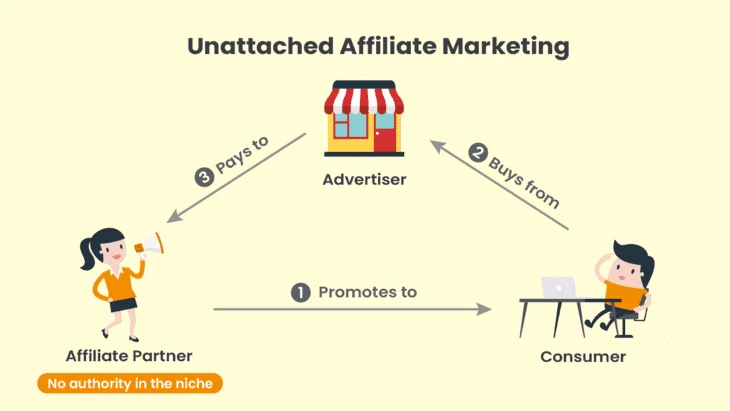
This type of affiliate marketing implies that you, as a publisher, are not connected to any brand or niche. As a rule, affiliates who participate in unattached affiliate marketing often rely on search traffic and/or paid advertising; firsthand experience with the item they’re promoting or personal authority does not play a significant role.
Related affiliate marketing
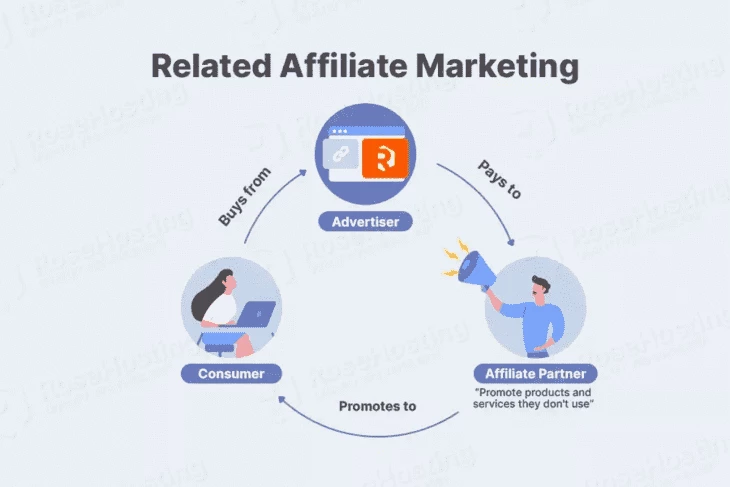
In related affiliate marketing, promotion tactics depend on the niche and the audience. MUAs might want to recommend an eyeshadow palette they’ve heard about, a fitness influencer can be seen sporting freshly received Gymshark apparel, or a mindfulness coach shares insights bestowed upon their friend during a seminar that might be of benefit to their followers.
Involved affiliate marketing
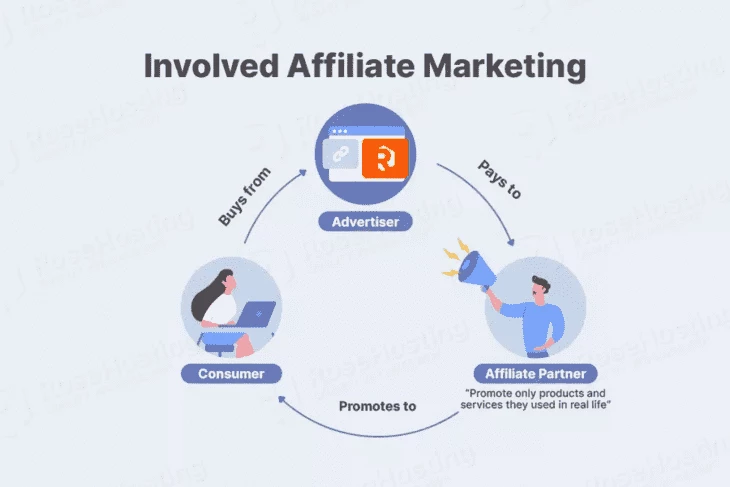
In the previous type of affiliate marketing, the affiliate may or may not have experience with the item they advertise. In involved marketing, it is compulsory: publishers actively endorse the products they have tested based on said experience and personal use. While it may be a little more time-consuming, it always pays back, as it provides ground for more profitable campaigns.
How Affiliate Marketers Make Money
How much can you make with affiliate marketing? Depends on a variety of factors.
Affiliate payment models
Normally, aspiring webmasters look forward to calculating their affiliate marketing income: they imagine all sorts of victories in all types of campaigns, no matter how lucrative. Certainly, there’s no harm in that, but before you click your Excel tab, get acquainted with the payment models commonly encountered in the industry.
- PPC, or Pay Per Click. Here, affiliates receive their commission based on the number of clicks.
- PPI, or Pay Per Install. Widespread in software and mobile app campaigns: affiliates are paid every time customers install an app.
- PPL, or Pay Per Lead. Affiliates get a fixed fee every time a referred visitor completes a targeted action.
- PPS, or Pay Per Sale. Affiliates are paid whenever users make a purchase.
How much can affiliate marketers earn
There’s no universal answer that fits every category of affiliates: where a professional grows bold, a beginner freezes in vacillation. Besides, the average income may depend on niches, affiliate programs, traffic sources, and other aspects. However, recent findings show that novices make up to $1 000 monthly, intermediaries tend to hit the benchmark of $10 000, and rare top-performers easily overcome the $100 000 bar.
Factors that affect affiliate income
Practically anything, if we’re being honest.
Affiliate marketing campaigns aren’t particularly fragile, but their metrics often respond to subjective categories, such as the level of trust between you and your audience, or the quality of the content you deliver. Many experts recommend outlining a portrait of an average customer in your niche — this is a surefire way to define what your ordinary John Doe likes and what pain points he wants resolved. Additionally, your income can be affected by more objective factors, such as, for example, conversion rates and the consistency of your efforts.
Diversifying affiliate income streams
Modern affiliates tend to promote several products at once or partner with several brands at a time, hoping to secure their standing. You can follow suit, too, and combine different ways to generate revenue: for instance, you keep delivering product reviews, but add comparison articles or education resources to combat galvanic program changes in rates or demand.
Affiliate Marketing Channels
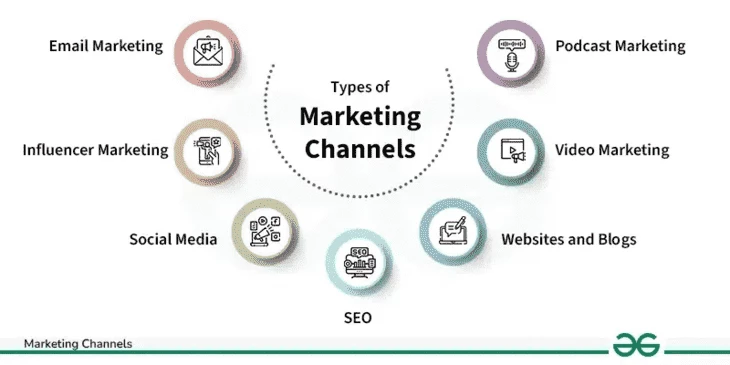
So, how to get started affiliate marketing? Start with the channels and their hallmarks. If you intend to prosper in the industry, you should understand which gives what and which products should be promoted where.
Blogs and niche websites
Who doesn’t like blogs? Some think that they are the relic of the past that is about to go extinct, but in reality, they are still thriving, and affiliates do post their in-depth articles, reviews, and tutorials to attract broader audiences. Technically, a blogger is a king or a queen in their own right because they can integrate affiliate links into original and helpful content without complications.
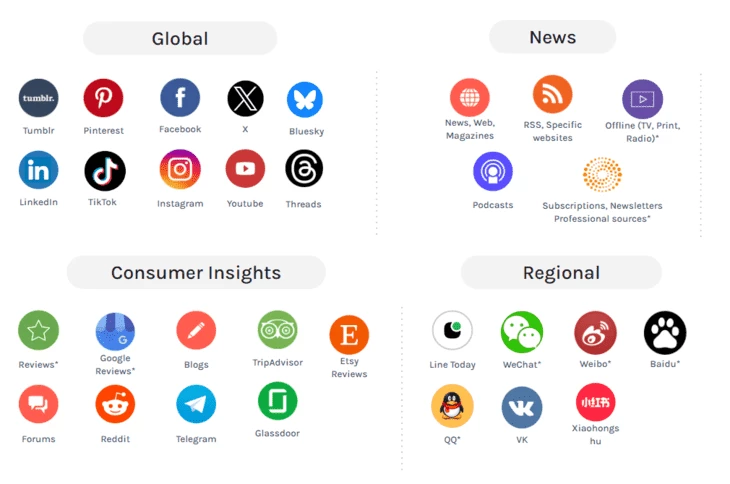
Social media (Instagram, TikTok, X, Facebook)
These platforms are a tad more confusing: nowadays, it’s difficult to influence people within a bubble, which creates an illusion of friendship. But that illusion can become your advantage and your weapon: depending on the platform, you, acting as creator, can build a community of like-minded people and engage participants to drive traffic to offers.
YouTube and video platforms
YouTube is a real catch when it comes to affiliate marketing because you can promote products easily: you twist the item this way and that, recall your experiences with it, share tutorials on how to use it, publish detailed reviews, explain features. Chances are random visitors have been looking for information on how to use it, so they click the affiliate link in the description.
Email marketing and newsletters
Email marketing is a direct line of communication between affiliates and subscribers who want to know the latest updates, but it requires a proper strategy: the email must not be too long, but it shouldn’t too short either; it should contain engaging visuals and tone of voice should reflect your general style, so it doesn’t cause any discrepancy in the user’s mind
Podcasts and media platforms
Affiliate marketing is a multifaceted business: visual platforms, such as YouTube or Twitch, have already been conquered, so why not put efforts into the audio?
Of course you can simply enunciate the ads during the episodes or the breaks, but you can also set up your own podcast channel and exercise your eloquence, posting regular reviews. People often listen to podcasts while doing routine tasks or running in the gym, so you have all the potential to nest the offer into the coziest nook in their brain.
Pros and Cons of Affiliate Marketing
Everybody wants to pull off a successful campaign that brings thousands of dollars of profit, but affiliate marketing, though it might seem a dream come true, has two sides of the coin. In the paragraphs below, we want to clarify both merits and demerits.
Pros
Let’s begin with the obvious — the advantages that constantly bring new affiliates into the fold.
One such advantage is certainly the industry’s low entry barrier: to enroll, you don’t need to develop products from scratch, establish a fulfilment center, register a trademark, or deal with a flurry of documents threatening to bury your underneath.
Secondly, it’s easy to scale your campaigns. The process will require some knowledge and maybe investment, but normally you can make do by just readjusting your targeting settings and optimizing the entire process: once everything is rearranged according to the data you receive from the analytics, you can expect higher profits.
And, finally, affiliate marketing is synonymous to flexibility. You can work from Bali, Mexico, or Germany, and your workflow will not depend on the usual working hours.
Cons
As for the drawbacks, we must start with the guidelines and policies. No matter how lithe and experienced you are, requirements, rules, and regulations will always shift, changing from lax to stringent, and rarely vice versa. As a result, you must remain cautious and attentive at all times, ready to strike and react whenever a new policy bomb hits your perfectly executed plan.
But the ever-changing policies are only half the problem: your success depends on the algorithms embedded into the software or platform you use. Once they alter, you’re obliged to follow or quickly find a decent substitute. Even if you already have a few options in store, the process of switching from one platform to another will take precious time — the time you’ve spent trying to build authority, establish a public image, and create a follower base. This is another flaw, often overlooked: chaotic success happens, but it is not a frequent occasion; most of the time, you will have to diligently interact with the audience until you’re sure they’re ready to complete the required action.
Who Should Try Affiliate Marketing
Affiliate marketing is an industry that is open to nearly anyone who wants to earn money on the internet, but there are a few categories that are destined to succeed.
Content creators and bloggers
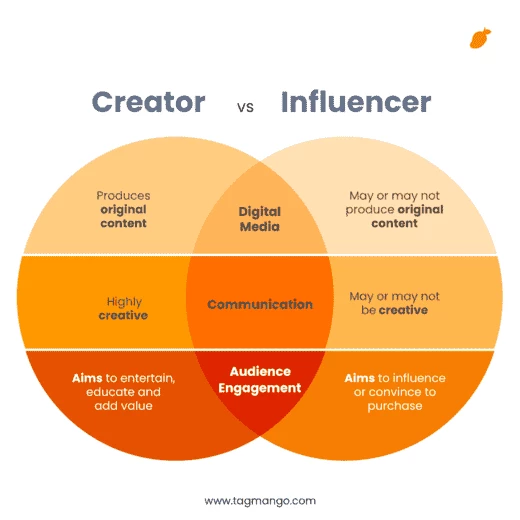
Content creators and bloggers are already familiar with the huge chunk of affiliate routine: they publish original videos and texts, attract new viewers and readers, and, quite possibly, check out the statistical readouts to see where they fail and what pieces get more views. As a rule, bloggers who took a guide to affiliate marketing and tapped into it, quickly showed impressive results, although their campaigns nonetheless needed refinement and proper targeting.
Social media influencers
These are not that different from the previous group of people, but they tend to stretch their tentacles to all imaginable platforms, creating stories, Reels, or ordinary posts. Influencers already know their audience well enough to recommend an item, and the audience already has a connection with the influence to trust their opinion (meaning: “warm” customers, whose interest in the product has been ignited, are more likely to buy it, even if they never seemed to need it in the first place).
Experts with a trusted audience
Some influencers are also experts — in fitness, technology, finance, crypto, or anything else entirely. Quite possibly, they’re already sharing their experience to make money, but they can use their public image and authority to gain more perks and recommend relevant tools to their followers.
Website owners and media projects
If you own a website or have some other digital project at hand, affiliate marketing is right up your alley, an opportunity you should definitely try: existing platforms can be integrated into online campaigns, and eventually become components of a bigger monetization endeavor.
How to Start Affiliate Marketing (Step-by-Step)
You’ve reached a turning point in our article, so you must’ve decided that making money in this business is your fate. Here’s your six-step path to success.
Step 1 - Choose a niche
Any journey starts with a pin in the itinerary: you should clearly understand what you’re doing and where you’re headed. Select the niche that feels natural to you; don’t chase profit blindly — instead, opt for something you really like and excel at.
Step 2 - Pick a marketing channel
Now that you know what niche you’re dealing with, define where you want to publish your content and optimize accordingly: Twitter doesn’t favor long texts (though it’s hard to say what it favors now with all the changes), Instagram is all about visuals, YouTube requires basic knowledge of video making, and livestream... is a livestream. You can also pick a role model and copy an approach until you gain sure footing and feel more comfortable.
Step 3 - Join an affiliate program or network
Time to join affiliate programs or networks that match your focus. Usually, such platforms provide personal managers that can help you navigate, give advice or feedback, or comment on your current performance.
Step 4 – Choose products to promote
Take a closer look at the offer storefronts on your platform and choose the products or services which you feel resonate with your audience. If you know your users well, you will be able to pick relevant offers that resolve the client’s pain points.
Step 5 – Create content and drive traffic
Offers are one thing, but the connection between you and your audience are another. You should always maintain this connection but not only by interaction — but by delivering helpful and/or entertaining content with affiliate links in it.
Step 6 – Track results and optimize
That’s where routine starts: where you want it or not, you’ll have to do some monitoring — conversions, engagement metrics, and clicks are important, so keep an eye on them. Once you understand what performs best and which pieces of content do not provide anticipated results, optimize immediately — change headlines, swap placement, or refine CTAs to convince people to take action.
Popular Affiliate Programs and Networks
Affiliate programs galore can stupefy even the most resilent of webmasters, let alone beginners. If you are not yet familiar with the industry, check out the options below — perhaps you’ll want to start your journey with the most popular options.
Amazon Associates
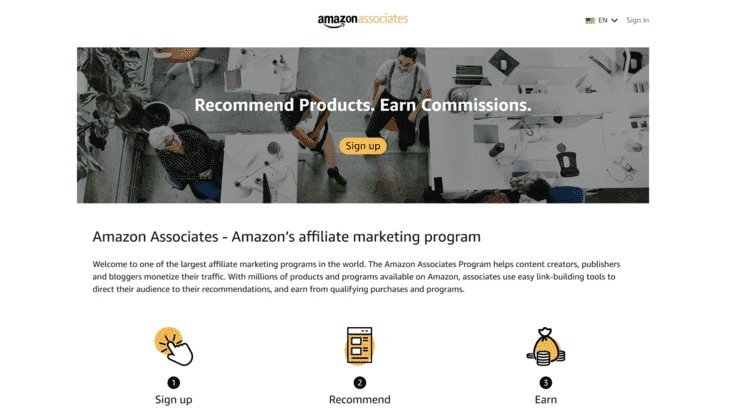
In the ballroom of affiliate programs, this one is a wealthy tycoon everyone wants to chat with. Amazon Associate allows publishers to advertise a huge catalog of products, and, additionally, it provides a comprehensive payment model with qualifying purchases and tracked links.
Shopify Affiliate Program
It’s hard to say whether it suits every aspiring webmaster, but eCommerce specialists certainly admire this one. Shopify is a referral-based model, which rewards sign-ups and merchant conversions.

Digital and SaaS affiliate programs
It may come as a surprise but many digital tools and SaaS companies have their own affiliate opportunities with recurring or high-ticket commissions. The listings always give different names, but if you’re resilient enough, you will be able to find something that strikes your fancy.
Affiliate networks (CJ, ShareASale, Impact, etc.)
Affiliates seek brands, brands seek affiliates, and it’s a far simpler task if there’s a centralized platform that solves managerial problems and reporting.
Common Affiliate Marketing Mistakes to Avoid
Even the most experienced people make mistakes, but it only stands to reason that beginners are more susceptible to the results of their actions. Here are the mistakes you can avoid making.
Choosing the wrong niche
One example: you know that gambling is a highly lucrative niche that can bring you millions of dollars overnight. What you do not know is that this niche requires impressive investment, powerful creative streak, and wit to stand out from the crowd of other affiliates. If you don’t take such aspects into consideration and throw headfirst into the business without proper research, chances are your campaigns will not work out.
Promoting too many products
Diversification is good, we’ve mentioned that before. But you shouldn’t take it too far because it becomes weird at best and suspicious at worst. Keep it nice and controlled, so your audience admires your recommendations, not label them as shady and odd.
Low-quality or sales-only content
What do you feel when you’re slapped across the face with a garish, straightforward ad? And then by another one? And yet another one? And what if the content you’re trying to unearth in the pile of ads isn’t as good as you imagined it to be?.. On the other hand, if the content is solid, users cope with the ads, if they are interwoven with the original pieces they appreciate. In other words, make sure you maintain equilibrium between usefulness and advertising, and you blog doesn’t seem too sales-y.
Ignoring SEO and analytics
This one’s simple: if you ignore the readouts, you won’t be able to spot the changes in user behavior; if you pay zero attention to SEO, you won’t rank high enough to draw attention of a broader audience.
Not disclosing affiliate links
Many affiliate programs — for example, Amazon Associate — require full transparency, meaning that all the marketing and affiliate endeavors should be clearly stated in the description. Even if you chose not to join Amazon, you should keep this in mind: failure to disclose your affiliate relationships can sully your reputation. And reputation is hard to restore.
How AI and Automation Improve Affiliate Marketing
AI is a moot topic, as it often raises concerns. At the same time, AI technologies can simplify affiliate processes — but you should know where these systems perform best.
AI-powered content creation
AI technologies cannot fully replace a human being: they are still fallible and lack imagination. However, if you need to draft an outline, organize quick and cursory research, identify keywords, or automate routine tasks, it certainly pays back to use a machine, not to drain a real employee, who can work with more complicated and interesting tasks instead.
Smart product and offer recommendations
People can do it, too, but data-driven systems are generally quicker and aptly analyze user behavior, matching audiences with the products these audiences would be eager to get.
Performance tracking and optimization
Automation is key when it comes to tracking: you don’t need a specialist who can monitor engagement, clicks, and conversions — machines are known to spot changes immediately, subsequently identifying trends and nascent tendencies that might have been overlooked by a human.
Fraud detection and compliance
If the traffic you receive seems even remotely suspicious, AI tools will promptly notify you, so you should consider testing a few AI fraud detection systems and implement the best one into your daily routine.
Personalized commissions and payouts
Advanced systems can adjust payouts based on affiliate marketer’s results and overall performance. This flexibility allows brands to adjust and offer higher commissions to top-performers, thus encouraging their partner to achieve bigger goals.
Affiliate Marketing Trends
Trends differ from platform to platform, but affiliate marketing as an industry often exposes patterns common for many channels.
Short-form video and social commerce
You may have noticed yourself: short-form videos and in-app shopping are so omnipresent it’s hard to find a platform that doesn’t actively promote that feature. While it might be annoying to some, most specialists admit that these formats contribute to faster discovery and trigger purchase intent.
Mobile-first affiliate strategies
The mobile market is expanding further, and it’s a crime not to pursue the opportunities. In other words, next time you conceive an affiliate marketing campaign, make sure your links and content are optimized for mobile users, otherwise you’ll be bound to sadly watch them go.
Influencer-driven affiliate sales
Influencers are either revered or hated, tertium non datur. In our case, however, they are your friends who can drive conversions and use their credibility and authority to your advantage: they can promote your product and, if their audience is loyal enough, convince their followers to buy it using their affiliate link.
Privacy-focused tracking solutions
Modern problems require modern solutions, you remember how the meme goes. In the affiliate marketing industry, things are about the same: the more privacy standards evolve, the more we need to adapt our tracking methods to remain compliant.
FAQ