Traffic Cardinal
wrote March 20, 2026
Traffic Cardinal
wrote March 20, 2026
Traffic Cardinal
wrote March 20, 2026
Traffic Cardinal
wrote March 20, 2026
We all love to sit around and chat about traffic, swapping tales of oh-so-clever tricks we used to score it. But once you have to work with several platforms at once, juggle spend, top up balances and separate flows, the back-office layer under the hood might start to creak. Functioning funnels and decent offers lose their luster when the financial side of it makes your life harder.
People rarely magnify this issue on conference stages, for obvious reasons. “How we fixed our payment setup” doesn’t exactly sound like blockbuster content. Yet, it matters. If your operation grows past the simplest possible version of itself, one day you’ll have to admit: ordinary bank cards are just a patch you keep reusing because replacing it seems too difficult and overwhelming.
Digitas Cards is one of those services aimed at people who’ve reached that point – they handle the payment side of affiliate work when the usual tools start showing their limits. So instead of serving you another feature dump of an article, let’s go through this properly: who this is for, what kind of weight it can take off your shoulders and how to tell whether your current way of handling payments has already outlived itself. Keep reading to find out!
Where Digitas Cards Fits In
Payment admin is not something affiliates get excited about on day one. On day one, they are busy with their traffic, funnels, offers and creatives. The rest usually functions like it’s supposed to, so nobody gives it much thought. However, that peace doesn’t last forever. Give it a few more platforms, accounts, campaigns and top-ups and the whole payment routine gets heavier all of a sudden. One clumsy move and those tiny things are already tangled into one ugly knot.
This, right here, is where Digitas Cards will come in handy. They offer affiliate marketers, media buying teams, performance marketing agencies, ad-tech platforms and digital wallet providers a more flexible way to handle the payment side of running traffic. The toolkit includes virtual cards, multiple ways to fund them, support for different billing identities, several currencies, dedicated BINs and API reporting.
And since we last spoke with the team, they haven’t been idle.

Their CEO Fahd confirmed that multi-currency functionality is now fully integrated, fraud and transaction-risk monitoring have been improved and BIN coverage has expanded across more geographies. There is more automation on the reporting side too, which should make sense to anyone who has ever tried to keep campaign spend organised with a mix of spreadsheets and memory.
Who Is This Service For?
Rattling off features doesn't really clarify their application, does it? We promised no listicle and we are sticking to it. Consider that a brief overview of what's new. Now let's get down to business and figure out who'll love what.
Solo Media Buyers and Independent Affiliates
This is the earliest point where a service like Digitas Cards starts making more sense than ordinary bank cards. Yes, initially, you might be running just one offer, one account and barely spending enough to notice the payment side at all. That stage is still simple and you can improvise your way through it. But sooner or later, the number of moving parts will grow and you’ll have to deal with more than you can actually handle alone. Manageable, but only because you keep manually holding it together. If you want to spare yourself extra admin and unnecessary risk, you’ll definitely find these opportunities golden:
multiple top-up methods – when funding traffic happens often enough to become routine;
multiple currencies – if your buying is no longer tied to one market and payment pattern;
different billing identities – a more practical way to keep separate things separate;
flexibility with major ad platforms – because the problem usually begins when traffic is coming from more than just one place.
So if you are still working solo, but your payment flows already take more effort than they should, this is probably the moment to consider such an option.

Small Affiliate Teams
You'd think getting more people on board would spread the responsibility and take some pressure off. But nope, the payment issue is still there, just shapeshifted a little. It’s challenging to keep the whole thing organised enough so that one buyer’s actions don’t create confusion for everyone else. Improvised card routines in this scenario might get messy pretty fast. One shared card here, another one passed around there, somebody tops up from one place, somebody else tracks spend somewhere else, and by the end of the week nobody is fully sure what was used for which campaign or account.
If you also feel like your payment flows could use some discipline, have a look at what Digitas Cards can help you with:
unlimited cards – easier separation between buyers, campaigns, accounts or traffic sources;
multiple names and addresses – more freedom in how payment details are distributed within the team;
spend separation – less mixing unrelated costs into one pile that somebody then has to untangle later;
API reporting – transaction data can go straight into internal reporting, dashboards or accounting instead of being tracked by hand;
more structured control – independence from shared access, improvised flows and occasional forgetfulness.
Fahd puts the practical benefit pretty simply: teams can see how much each campaign or ad account is actually consuming in real time, without building that picture manually from scattered bits and pieces.
So if your team is still small but the payments are already being handled through mutual understanding and light panic, we bet this service is beginning to look a lot more attractive.

Agencies, Networks and Larger Operators
At this level, payment flows are an inseparable part of the process. It goes beyond just “paying for ads”: you have to split spend between clients, buyers, accounts, geographies and teams. The old “we’ll sort it out as we go” approach won’t work here. Leave it as is and eventually it’ll lead to delays, messy segmentation, blind spots and too many small dependencies stacked on top of each other.
For this kind of clients, Digitas Cards offers a way to keep payments simple and transparent (even if your team or company has a tricky hierarchy):
spend segmentation – so different clients, teams, markets or account groups are not all forced into the same payment logic;
dedicated BINs – better suited to larger buying structures with more accounts and more spend in motion;
multi-GEO coverage – because larger operators rarely stay in one lane for long;
custom infrastructure options – for teams whose operations don’t fit into a standard template;
reliable support – larger teams usually need a real point of contact when something is unclear or goes sideways.
This is also the right place to talk about dedicated BIN benefits in more detail. Fahd says that trustworthy issuing relationships can improve approval rates on major ad platforms, and when big budgets are involved, even a small gain in stability means a lot.

I’m Interested, What’s Next?
Let’s say you’ve read this far, recognised yourself in one of those profiles and thought: alright, this might actually be useful. Now the less exciting and a lot more practical question is: what happens between interest and first use?
According to Fahd, onboarding starts with an application and standard business verification.
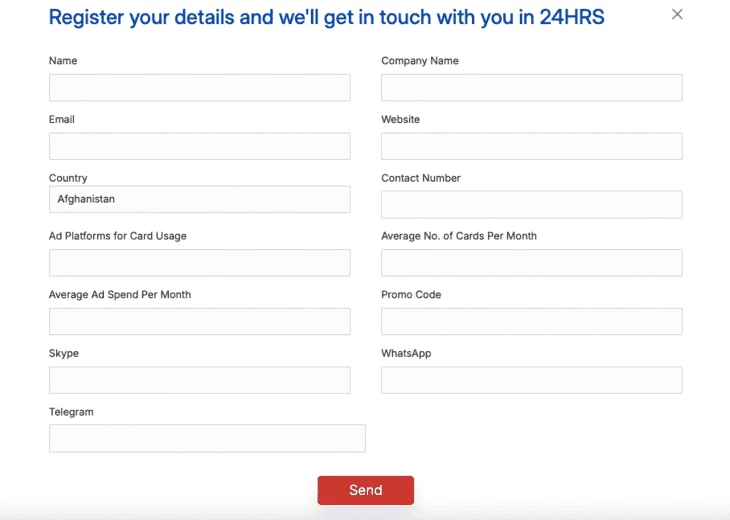
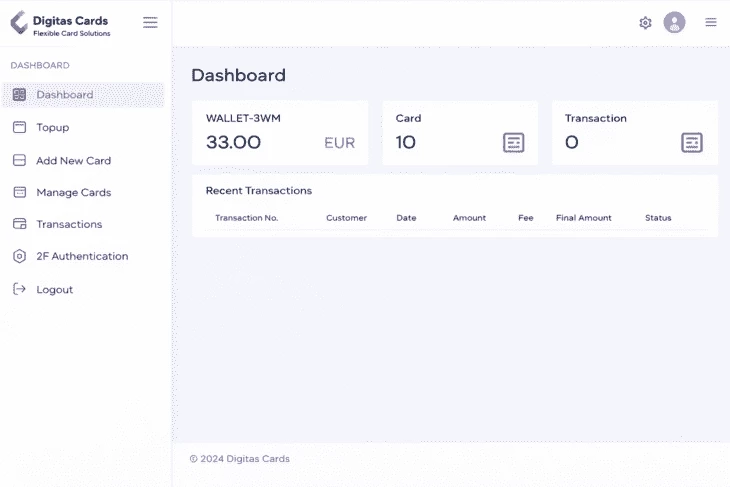
After that comes KYC. Once the account is approved, you get access to the dashboard, fund your wallet and can proceed with creating cards for campaigns.
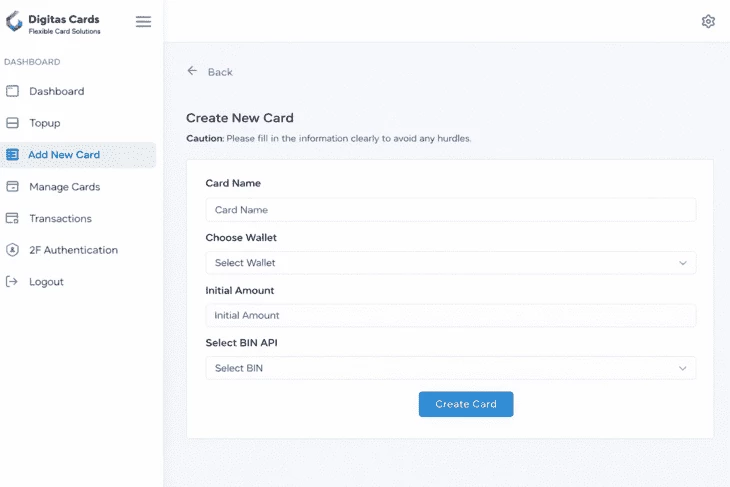
That is the basic route. If your business is larger and needs API integration, the process is a bit less plug-and-play. In those cases, the team can help connect card creation, reporting and budget management to internal systems. And if we are talking white-label or more bespoke arrangements, then yes, people have to actually speak to each other and design the structure together. Horrifying, we know, but it’s totally worth it.
So if you were worried it’d turn into some bureaucratic swamp, that’s not the case. You apply, get verified, get access, fund the wallet and start using the cards – with more involvement only if your own structure asks for it.
One small note before we wrap up. If cards are only part of the puzzle for you, there is one more breadcrumb worth following. In our earlier interview, we also discussed their Zero Tax option. That rabbit hole about taxes, residency and other bigger structural questions deserves its own room, so we won’t drag it in here, but you can check that article separately:
Conclusion
No service like this becomes relevant out of nowhere. So if you recognised your own routine somewhere in this guide, maybe the real question is not whether you need more structure yet, but how long you want to keep working without it.