Traffic Cardinal
wrote January 15, 2026
Traffic Cardinal
wrote January 15, 2026
Traffic Cardinal
wrote January 15, 2026
Traffic Cardinal
wrote January 15, 2026
CPA this, CPA that... sounds familiar, no? Especially if you’re a consummate expert who deals with the model on a regular basis — it’s so common it slaps you in the face on every affiliate program site you encounter.
But what about beginners? They’ve seen the letters, they’ve read the details, and, perhaps, they’ve jotted down a thing or two related to the subject, but all the necessary bits are always scattered across multiple forums, so whenever they get stuck, they need to find the exact site. With that in mind, we decided to create a comprehensive guide dedicated to CPA.
What Does CPA Mean in Affiliate Marketing?
Before we answer your question — what is a CPA network? — we want to highlight one thing: this isn’t the only abbreviation you’ll come across. While other models generate revenue based on the number of clicks (CPC), contact details (CPL), or give a percentage from the continued user activity (RevShare), in CPA advertisers pay affiliates only when a specific action is taken (the user signs up for a portal, makes a purchase, submits their contact information, etc.)
What Is a CPA Network?
A CPA network helps find a middle ground for both sides: advertisers list their offers, and affiliates react by choosing offers for promotion with transparency in mind. Besides, neither side has to deal with the most complicated aspects of any campaign — tracking, payments, and reporting — as these functions are handled by the network itself.
Essentially, CPA networks create an efficient platform where advertisers can scale their campaigns, and affiliates can discover high-quality offers not having to deal with the most intricate aspects of campaigns.
How CPA Networks Work
CPA network marketing connects three major parties: the network itself, the publisher (also known as the affiliate), and the advertiser. Advertisers define targeted actions; the publishers promote products and services, and the network acts as the intermediary, handling payments and tracking performance via tracking links and other embedded technologies. Essentially, what the platform does is “register” every visitor who completes the desired action. Once the network verifies and approves the lead, the affiliate becomes eligible for payment.
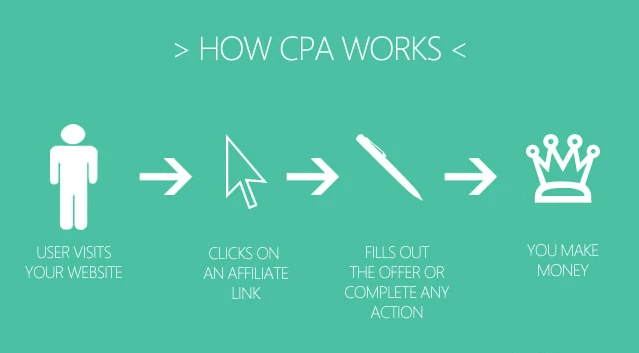
CPA networks work with different payment models depending on the advertiser’s business objectives and preferences, but the variety mostly boils down to the common options: CPA (one-time payment for each qualified action); CPL (payment for a defined lead); CPI (payment for each app install); CPC (payment for each click); and RevShare (a percentage of the customer’s generated profit).
Features of a Good CPA Network
Considering the abundance of CPA networks on the market, it’s only logical to narrow down the selection by enumerating the features only decent options have.
Diverse offers and niches. Strong CPA networks provide access to a large variety of offers across a large variety of verticals and niches. Affiliates major in health or finance, switch between gaming and dating, dabble with e-commerce or other niches, so it would be too tiresome to toggle between two or three platforms at once.
Advanced tracking and analytics. Accurate performance tracking is pivotal: after all, affiliates get paid for completed actions, not silent glances. As a result, high-quality CPA networks boast robust tracking and analytics.
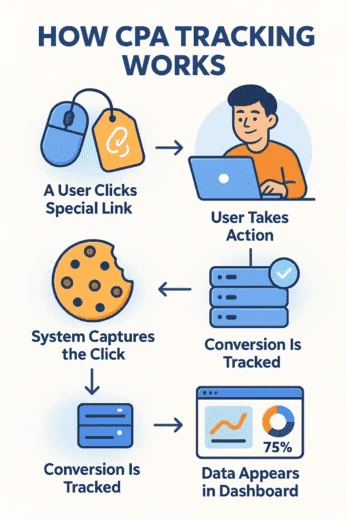
Fraud detection system. Fraud is the plague of the 21st century — that’s a wisdom uttered by the most inexperienced affiliate, and even greenhorns have learned to combat it. Reputable networks have taken it one step further and implemented fraud detection and prevention tools in order to protect both affiliates and advertisers.
Convenient payment methods. Affiliates expect flexibility and reliability, and the networks that value their reputation are willing to provide various payment methods, varied thresholds, and regular schedules.
Affiliate support and learning resources. If the platform has a dozen features but no support, affiliates won’t stay long enough — they’ll shift to more responsive options that are willing to help them deal with the problem. Prioritizing the functionality and clients, high-quality CPA networks provide access to educational materials, community tools, and personal managers.
How to Choose the Right CPA Network
Hopefully, the question what is a CPA affiliate network is no longer an impediment, as well as the working principle behind the phenomenon, and we can segue to the most important aspect of our CPA network journey: the selection.
What to Check Before Joining
Platforms tend to brandish their features without categorizing them: they just state that they can do everything, everywhere, all at once. Here are the points you should consider while choosing the network.
1. Reputation and Credibility
Before joining a platform, research its reputation. Well-established CPA networks are transparent: they blatantly explain how they operate and often post genuine reviews from affiliates.
2. Offer Quality and Relevance
We’ve already mentioned that good CPA networks provide access to multiple offers across multiple niches, but it’s not the end of it: you should also read the descriptions and requirements and determine whether they are clear, relevant, and reasonable. If something seems off, do not risk it.
3. Tracking and Reporting Tools
Accurate, real-time tracking and detailed reports are at the core of any reliable network.
4. Payment Terms and Methods
Ah, the payment structure. Make sure it fits your requirements: check out payment frequency, minimum payout threshold, and available methods.
5. Affiliate Support and Resources
Reputable CPA networks normally provide affiliate managers, onboarding guidance, and educational resources. While it may not be necessary for experts, freshers might consider it a real difference maker.
Red Flags to Avoid
Remember those TikTok/Twitter trends asking about red flags in a person? Let’s think about red flags in a CPA network.
1. Unrealistic Earnings Claims
See a promise of guaranteed profits or unusually high payouts without clear explanations? Treat them with caution.
2. Lack of Transparency
If a network is vague about tracking methods, payment schedules, or offer terms, it’s a strong warning sign. A legitimate CPA ad network always provides clear documentation and is never repelled by open communication.
3. Payment Complaints or Delays
Reliable networks pay on time and explain their delays. Therefore, frequent reports of late/missing payments are a major red flag.
4. Poor or Non-Responsive Support
If you have noticed that the manager is either slow or unhelpful during the first stages, don’t waste any more time: it is unlikely to improve.
5. Upfront Fees to Join
As a rule, legitimate CPA networks are free in that regard — they do not charge affiliates to join.
How to Join a CPA Network
Your four steps to success.
Step 1: Create a Domain Email and Website
Before applying, set up a professional domain email and a basic website, as many CPA networks view free email addresses or the absence of a website as a lack of seriousness.
Step 2: Fill Out the Application Carefully
Your application must contain specific information on your real traffic sources, the GEOs you target, and the niches you plan to promote.
Step 3: Prove You’re an Experienced and Reliable Affiliate
It’s not a secret that CPA networks want to work with specialists, so you should pose as one. Show that you understand performance marketing and highlight the most relevant experiences: the time you ran ads on Facebook or managed content or websites.
Step 4: Communicate Honestly With the Manager
Your application is examined by an affiliate manager, who may contact you for a conversation. No need to get scared: stay confident but don’t show too much bluster and honestly tell them about your experiences, traffic volumes, and promotional methods.
Methods to Promote CPA Offers
Once your application is approved, you can choose your promotion method.
Landing (Splash) Pages
Landing pages capture attention, successfully driving users towards a desired targeted action.
Review or Comparison Websites
This form of promotion focuses on the benefits and drawbacks of a product, adroitly leading users towards informed decisions.
Social Media and Paid Ads
More experienced affiliates who don’t want to waste time often invest in social media and paid ads, as they seem organic and natural to the feed and don’t disrupt user experience on the platform.
Email Marketing
Email marketing requires a certain degree of resourcefulness, as affiliates promoting products in newsletters, promotional campaigns, or automated email sequences should capture user attention and maintain their curiosity.
Influencer and Content Marketing
It’s not about direct selling — it’s about the value of the product mentioned in blog posts, SEO articles, YouTube videos, tutorials, and partnerships.
Tips for Beginners in CPA Marketing
Of course, the entire structure may seem a little overwhelming at first, so we decided to come up with a few tips for those who haven’t yet gotten the hang of it.
Start Small and Test Offers
It’s only logical that you should begin with smaller offers or those with easier conversion actions and test multiple offers on a small scale before going all-in.
Track and Optimize Campaigns
At first, teach yourself to regularly monitor clicks, costs, conversions, and traffic sources. When you feel a bit bolder, open the analytics dashboard and define trends, eventually determining opportunities for improvement.
Stay Honest and Avoid Fraud
Fake conversions won’t get you anywhere, so refrain from using bots, click farms, or misleading tactics — only ethical and clear promotion builds trust with networks and your audience.
Build Relationships with Affiliate Managers
It’s not that you should immediately befriend the assigned manager, but it’s good to have a sidekick who knows what offers are profitable and which traffic strategies pay back.
Conclusion
CPA marketing is one of the models that can really reward affiliates for measurable results, and in this material, we covered the most common questions raised in relation to the subject.
FAQ