Traffic Cardinal
wrote December 26, 2025
Traffic Cardinal
wrote December 26, 2025
Traffic Cardinal
wrote December 26, 2025
Traffic Cardinal
wrote December 26, 2025
All affiliates have trade secrets based on hard data, profound research, and their preferences: some heavily rely on limited-time offers, while others are busy making magic on their socials. But what is the ultimate winner? Is there an approach that can guarantee success?
Digital marketing savants reply in the affirmative. All you need to do is revise your campaign. add the lacking components and mix them all together...
Component I. Personalization
Personalization is always at the core of it, but during the holiday season, it is constantly brought to the fore, sometimes overshadowing the other components. Supposedly, you know your audience — you have undoubtedly examined the readouts and segmented the users based on a variety of features — so it won’t be a problem to provide content that resonates with the people and speaks to them.
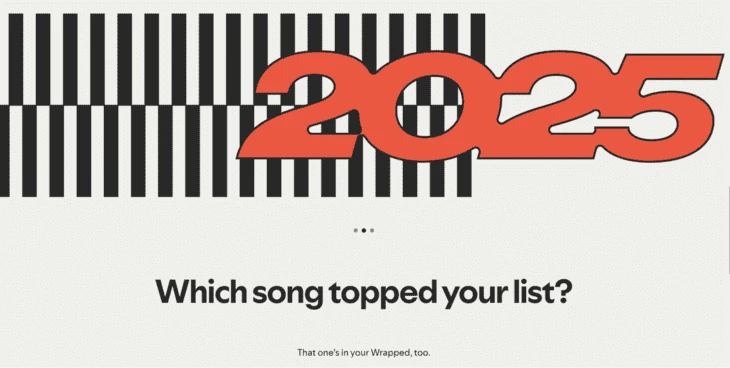
Depending on the criterion, you can shape your content to make it appealing to all groups: for example, Spotify Wrapped-like storytelling may work with more tech-savvy audiences, such as Millennials and Zoomers — especially if you decide to gravitate toward FOMO. At the same time, context-specific ranking technology that shows items particular buyers are most likely to purchase doesn’t acknowledge the audience’s age, as it simply identifies buyer intent, present in all people. In certain cases, you can simply send a personalized email or address the customer by their name — while it is not the same as inventing a fully personalized campaign, it is an important nod to further partnership and stronger professional bonds.
Component II. Emotion
AI might get the upper hand when it comes to volumes, but it plummets nine stories to its death whenever the emotional component is involved. People want genuine interaction; they actively react to the ads that, in Marie Kondo’s parlance, “spark joy”, especially during the festive season when the entire world is festooned with garlands and decorated with flowers and illumination.

The following statement might be an overreach, but it is safe to say that real life can sometimes be dull and stultifying: locked up in offices, drowning in daily routine, ordinary users want to snatch a spark of joy and ignite the inner light. Why not give people a chance to feel a little better and provide — though momentary — change, and break the cycle, smashing the proverbial work-life balance with a spontaneous but desired gift?..
Component III. Gamification
The writer of this article has been recently diagnosed with ADHD, which certainly undermines the effectiveness of gamification as a concept: it is exceedingly hard to follow the rules and maintain a steady pattern. Sorry, Tamagotchi. You were born to die.
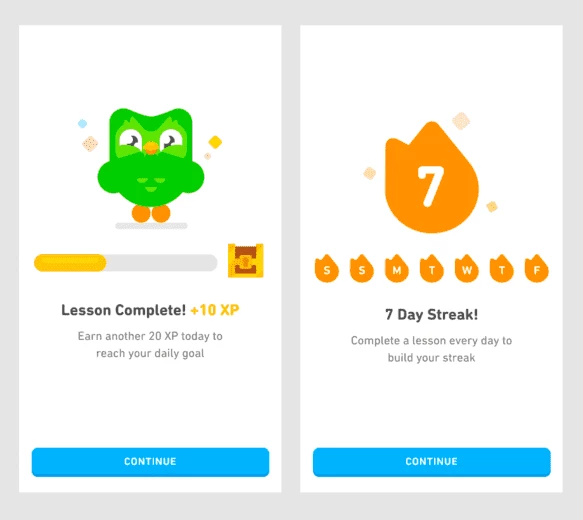
At the same time, the array of gamification techniques is as diverse as the world, and “living” avatars are only one aspect of it. Duolingo nailed the approach; it’s the vet with a Green Heart, if we ever saw one, but you don’t have to go that far and create a full-fledged (pun unintended) mascot with a threatening mien. Instead, you can place a challenge or a quiz, or, if you’re in the mood for a little hunt, scatter Easter Eggs across the site and ask users to explore it, or post an advent calendar with additional offers that might eventually pique users’ curiosity and impel them to buy another product, service, or subscription.
Component IV. Limited-Time Offers
Last Call! Final Offer! Only 3 Hours Left! You’ve seen it all before. You must have used these all before.
It’s undoubtedly a win-win: you get your boost, and customers get their product nudged by the proverbial FOMO — fear of missing out.

More often than not, people tend to plod, procrastinate, and postpone, choosing the right excuse: it’s too late; not too urgent; I have things to do; I’ll get to it when I have time, etc. But if they are down to the wire, they literally don’t have time to formulate the excuse — the deal of the foreseeable future is suddenly being hauled into the present moment. It’s now or never. You either buy this pair of shoes or watch it disappear from the store, never to be seen again. This approach, combined with personalization, works wonders: you can tailor the offer specifically for your audience and provide an 80% discount on the time-limited offer, pushing people to take one step forward and claim their product.
Component V. Social Proof
Does it even require explanation? Whenever people buy a product on a marketplace, they want to know what exactly they are buying. Technical specifications aside, users are interested to know whether this product — or service, or subscription — meets their projected requirements. Is it as good as they imagine? Does it work as they expect? Can it resolve their pain points?.. Well, the last one is probably a little too marketing-sounding; ordinary people don’t refer to their needs as pain points, but you get the drift. All in all, customers want confirmation that the product they are buying is indeed top-notch, world-class, first-rate... You name it.
That’s where the social proof approach comes in. There are a few examples of how this technique can be executed on the site:
- Comment section. You can create a star rating section where people — actual buyers — post their written feedback, describing the benefits and flaws of the product.
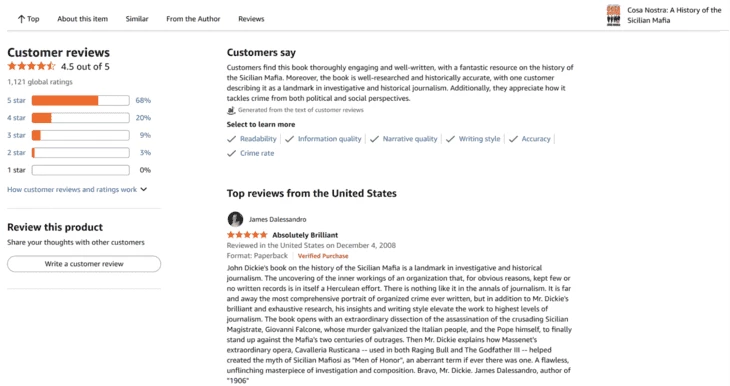
Customer Reviews on Amazon - UGC/Influence marketing/Expert endorsement. While any buyer is welcome to share their thoughts on their socials and post pictures and videos featuring the product, it’s arguably more beneficial to contact a high-ranking influencer who can promote your brand on their account. It’s also possible to convince an industry mogul to use your product and ask them for feedback — it’s not exactly influence marketing, but it still has a similar ring to that. After all, influential people are all influencers, right?..
- Case studies/Wisdom of the crowd. If you have detailed — and not too classified — data to post, you can show it to your customers. Say, the product has been bought 20,000 times, and 19,000 users were absolutely happy with it; 500 users got a faulty product (and received an immediate refund + present), and the rest used it only once (which is in no way representative). It was only an example, but you can contrive your own tactic and post the results on your landing page.
- Awards. Affiliates invest in awards ceremonies for a reason: whoever receives the award can proudly post it on their site and brag about their impeccable reputation.
You can employ all the strategies at once or test them and choose the one that can be interwoven into the fine structure of your site and campaign.
Wrapping Up
During the holiday season, everything’s at stake: competition thrives, true, but customers are no longer sleepy — they are also ready to take (targeted) action. Use these tactics in your holiday season campaign to achieve even better results.