
 Traffic Cardinal
wrote January 21, 2026
Traffic Cardinal
wrote January 21, 2026
Traffic Cardinal
wrote January 21, 2026
Traffic Cardinal
wrote January 21, 2026
Everyone in affiliate marketing works with ad networks — it’s kind of inevitable if you are in the business. But have you ever thought about what they are from a more technical point of view?
Some of the affiliates reading this introduction might scrunch their noses and roll their eyes in a bout of neglect, wondering whether this information is pivotal for their professional well-being and prosperity. On the one hand, it is not. On the other hand, the better you understand the platform’s working principles, the better you previsualize upcoming adjustments to scale up your campaign.
Understanding Ad Networks
Let’s take the bull by the horns and start from the very beginning: with the perennial question, what is an ad network?
Definition of an Ad Network
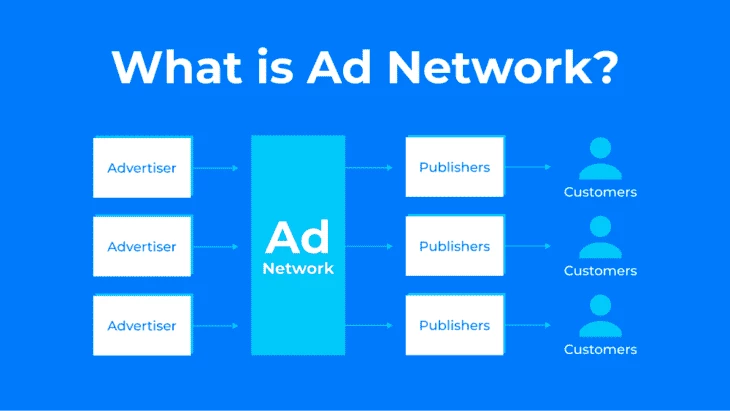
The term ad network is used to describe a platform that connects businesses that want to run ads with websites and those that want to host them. The core purpose of such a network is to collect available advertising space (known as inventory) from many publishers and match it with the needs of advertisers in one place.
Difference Between an Ad Network and an Ad Server
More often than not, advertising network examples are interspersed with ad servers, which, as a result, flummoxes aspiring affiliates. These two phenomena do appear in the online advertising system, but they are not the same thing. Strictly speaking, an ad network is a marketplace, a broker that aggregates publisher inventory and sells it to advertisers. What it does is match buyers and sellers of an ad space across multiple sites.
As for ad servers, they are not platforms, but simply tools that deliver and track said ads, measure performance or help manage creatives.
How Ad Networks Operate
The technical part will be split into several stages.
Ad Delivery Process
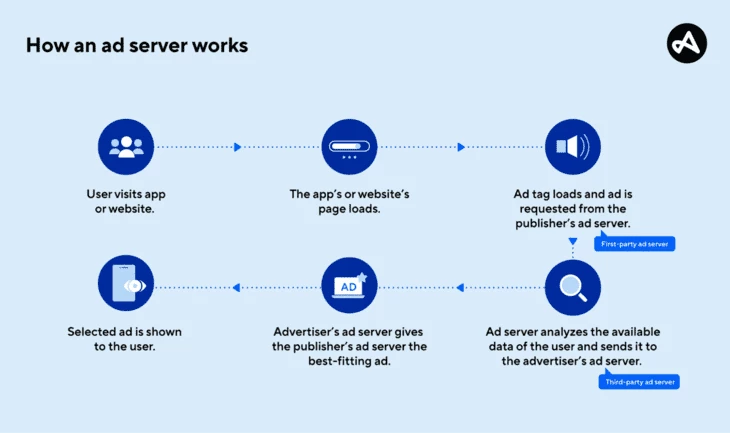
As we have previously mentioned, ad networks aggregate advertising inventory from publishers and match it with advertisers who want to buy that space, serving as a central hub. The ad delivery process normally consists of the following stages:
- Inventory aggregation. Publishers sign up with an ad network and provide information about the ad space they have available; the network collects and organizes this inventory.
- Campaign setup. Advertisers then create campaigns on the network’s platform, outlining their goals and specifying the targeting settings.
- Ad matching. The system shows an ad to every user that meets the predefined criteria.
- Tracking. As specified above, ad servers records clicks, impressions, and other critical data.
Targeting and Optimization
Your first shots may be less successful than the next, so you might want to improve your strategy. Normally, the most logical step is to refine the targeting settings based on user data and publisher information — call it optimization at its finest. The moment the first changes are made, the network can place apter ads for this particular audience.
Benefits of Using Ad Networks
What is an advertising network? We believe we did answer this question. However, we haven’t yet discussed why you — being a publisher or an advertiser — should use these networks.
For Publishers
There are three main advantages:
Ad space monetization. Publishers gain access to a wide pool of advertisers without having to sell each spot directly.
Simplified ad management. Networks provide tools that handle ad delivery and reporting, thus making the management processes more coherent and less complicated.
Increased fill rates. By aggregating demand from advertisers, ad networks ensures that a publisher’s ad space is more consistently sold rather than left empty.
For Advertisers
The benefits are as follows:
Expanded reach. Advertisers can place ads across multiple sites from one platform.
Targeted delivery. Networks offer targeting and optimization tools to reach audiences more effectively.
Campaign management. Tracking and reporting tools, embedded in the platform, help advertisers manage campaigns and monitor performance across several placements at a time.
Types of Ad Networks
When we accost an advertising network in the context of what is ad network in digital marketing, we hardly hope to discover a one-size-fits-all example, which would be nice but counterproductive. As you can expect, they are four general types of ad networks, and we are going to describe them all — in but a few words.
Display Ad Networks
Display ad networks are perhaps the most familiar ones. They focus on visual ads on websites and apps, collect available display inventory from publishers and make it easier for advertisers to buy placements in bulk rather than dealing with each site separately.

Native Ad Networks
Native ad networks specialize in placements where ads match the look and feel of the publisher’s content. Unlike traditional banners, these advertisements are designed to blend into the user experience — for example, appearing as recommended articles or sponsored posts — while still being served through an advertising network platform.

Programmatic Networks
Programmatic networks are enabled with the RTB technology. It means that ads can be purchased and served instantly. In short, they rely on automation more than any other type of ad network examples enumerated in the article.

Specialized or Niche Networks
Finally, specialized or niche networks deal with particular segments of inventory or specific channels. These ad network examples include networks dedicated to mobile ads, video content, or specific verticals.
Ad Network Pricing and Formats
Ad networks do act as intermediaries between publishers and advertisers, but, although the working principle is roughly the same, they do not resemble each other: they differ in models and approaches.
CPC, CPM, CPA Models
Here are three most common models: in CPM, advertisers are charged for every 1000 impressions (for every 1000 times an ad is shown, regardless of the user engagement); in CPC, advertisers pay for clicks, and in CPA, advertisers only pay when users accomplish a specific — also called targeted — action.
Common Ad Formats
Ad networks are bound to support various ad formats to effortlessly blend into any creative style and placement opportunity. The formats vary and depend on the network you choose, but these options remain more or less common: banner ads, display ads, native ads, and video ads.
Key Features to Look for When Choosing an Ad Network
Now that you do not repeat the question, what is ad network, you are ready to select the platform and start scraping up your fortune. Here are three major features you should consider before you move on.
Targeting Options
Some say that reporting is more important, but we’d say it’s a runner-up: targeting options (pre)define your success: based on user attributes, you can determine who should see your ads and create a portrait of your average customer.
Reporting and Analytics
If a high-quality ad network doesn’t have reporting and analytics features, it is not a high-quality ad network. Usually, such platforms use the data from your campaign performance, letting you make wiser, informed decisions: how to allocate the budget, what creatives to alter, and which settings to adjust.
Reach and Inventory
How critical are these two? Well, pretty much: a larger reach combined with diverse inventory is a synonymous structure to the phrase “more opportunities” as it can display ads to various audiences across various sites.
Examples of Popular Ad Networks
Ad networks galore is not new to the market: affiliates, finicky people by nature, have made it their purpose to alleviate stress, automate the processes, and simplify work, so they regularly surf the internet on the lookout for the best option there is.
Google Display Network (GDN)
One of such options is certainly Google Display Network, or simply GDN. Predictably, this network spans a vast array of websites, letting advertisers place ads across millions of sites with just one campaign.
Google’s abilities are not limitless, but they’re pretty close to what we would consider limitless: the platform provides contextual delivery (matching ads to the content of the site), remarketing (showing ads to users who previously visited a site), and demographic or geographic filters.
Other Major Networks
Google’s display ecosystem, however, is only one option on the market: there are other prominent networks that can attract your attention. One of them is another platform established by Google (Google AdSense, which serves text, image, and responsive ads), but others — we promise — have no ties with the internet mogul.
The other option focuses on natives: among the most popular ones you must have bumped into at conferences you can see Taboola, Outbrain, MGID, and RevContent. They work with the less intrusive forms of ads.
Then, there’s one more option — programmatic and specialized networks deserve their place. Those experts who major in other niches can check out platforms designed specifically for mobile apps campaigns or video campaigns.
The Evolution of Ad Networks
Even reading this relatively short piece, you can conclude that the formats have changed: they shifted from traditional networks to programmatic advertising.
From Traditional Networks to Programmatic Advertising
It may not be obvious yet, but people who have been working with ads for a long time, certainly spot the difference: ad networks began as aggregators of ad inventory, which collected unsold advertising space and sold it in bulk. It was convenient: experts could save time normally spent on endless negotiations.
It gradually became obvious that the approach needed further refinement, the reason being digital media’s quick sophistication.Finally, programmatic advertising options appeared, putting automation at the top of the list.
FAQ


