Traffic Cardinal
wrote January 23, 2026
Traffic Cardinal
wrote January 23, 2026
Traffic Cardinal
wrote January 23, 2026
Traffic Cardinal
wrote January 23, 2026
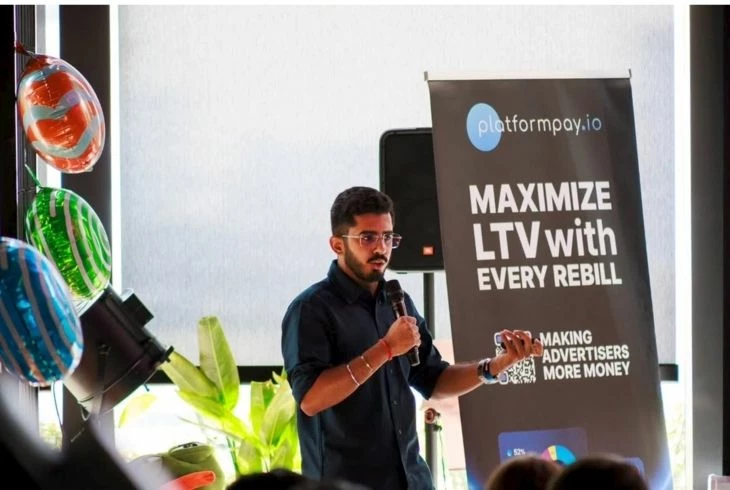
We sat down with Aryan Ahuja, a webmaster and expert who has integrated AI into the very core of his business operations. His journey reveals a powerful shift: from viewing AI as a simple tool to seeing it as a foundational system for scale. In this exclusive interview, Aryan pulls back the curtain, detailing exactly which tasks AI masters, where it dangerously fails, and how this technology has reshaped his team's results — driving tangible improvements in CTR and ROI.
The central lesson? AI is not a replacement for human judgment but a force multiplier that rewards skilled operators and transforms "hero-based" work into predictable, system-based performance.
How long have you been using AI in your work?
In real, revenue-impacting ways: ~2–3 years. In serious, system-level ways (creatives, analysis, ops, leadership): ~12–18 months.
Early phase = copy + ideas
Current phase = decision support, speed, leverage, and scale
What tasks can be accomplished with AI?
High-impact tasks AI does well
Ad copy generation (hooks, headlines, body variants)
Creative ideation (angles, storyboards, UGC scripts)
Offer research & angle extraction
Funnel audits (structure, friction points)
Data summarization (what’s working / what’s not)
Competitor ad analysis (themes, formats, claims)
SOP creation & documentation
Training material drafts
Performance summaries for leadership
A/B test ideas & hypotheses
Media buyer feedback drafts
Which tasks can be fully delegated to AI?
Fully delegatable (with light human review)
First-draft ad copy
Creative angle brainstorming
UGC scripts
Variations for scaling
Daily performance summaries
Meeting notes & action points
SOP drafts
Onboarding docs
Checklists
Data cleaning & aggregation
Basic competitor scraping + summarization
Rule:
If the task is repeatable + logic-based + pattern-driven, AI can do 80–100% of it.
What should NEVER be delegated to AI? Why?
Never fully delegate:
Budget decisions
Final scaling calls
Risk decisions (policy edge, compliance gray areas)
Team performance judgment
Hiring & firing
Offer trust decisions
Relationship management (networks, reps, partners)
Why? Because AI:
Has no accountability
Doesn’t feel platform risk
Can’t read human intent, fatigue, morale
Doesn’t understand business consequences
AI is a tool, not an owner.
How did ROI & CTR change after AI integration?
Typical observed changes (when used correctly):
CTR: 1.5% to 3%.
Mainly from:
Better hooks
Faster creative iteration
More angle testing
ROI is from +15% to +25%.
Mostly from:
Killing losers faster
Better creative-market fit
Less human bias
Biggest influence on readouts:
Speed of iteration
Creative volume
Clear prompts + frameworks
Human filtering of AI output
AI doesn’t magically improve metrics — it increases the number of good shots you take.
What best results do you have before vs after AI?
Before AI:
Scaling depended on 1–2 star media buyers
Limited creative throughput
Slow testing cycles
Burnout during scale
After AI:
More consistent winners
Faster recovery after fatigue
Easier onboarding of juniors
Predictable testing engine
Key shift: From hero-based performance → system-based performance.
Do AI tools differ by traffic source?
YES. 100%. Each platform has different creative formats, auction logic, policy risk, and user intent.
Example:
Facebook: Hooks, emotions, UGC, pattern interrupts
Google: Intent matching, keyword-to-offer logic
TikTok: Native trends, rawness, creator psychology
Same AI model? Yes.
Same prompts, logic, training? No.
You need platform-specific AI frameworks, not separate “AI tools.”
Can AI predict winning combinations?
Short answer: Partially. AI can:
Rank ideas by likelihood
Eliminate bad ideas early
Suggest strong combinations
AI cannot:
Predict platform auction behavior
Predict fatigue timing
Predict policy enforcement randomness
Best use:
AI = filter
Human + platform data = decision
Can AI resist Facebook bans or improve trust?
Important truth:
AI cannot “beat” Facebook systems but AI can reduce risk. What AI helps with:
Policy-safe phrasing
Flag detection before launch
Creative compliance rewrites
Account hygiene SOPs
Warm-up & scaling discipline
Risk scoring creatives/offers
What it cannot do:
Prevent random bans
Reverse enforcement decisions
Fake trust signals
Trust is behavioral, not textual.
Do you use AI to analyze competitors? How?
Yes — heavily. AI-driven competitor analysis:
Scrape ads → extract hooks
Categorize angles
Identify emotional triggers
Detect offer structures
Spot repetition patterns
Track creative fatigue signals
Instead of:
“This ad looks good”
you get:
“This angle appears in 37% of top ads → suggests market resonance”
What common mistakes webmasters make with AI?
I’d say:
Treating AI like magic
Using vague prompts
No feedback loop
Blindly launching AI output
Not training AI on their data
Expecting AI to replace thinking
Over-automation too early
Ignoring platform nuance
Letting juniors rely on AI without fundamentals
Do you train AI on your own data? Is it safe?
Yes — but carefully. Safe to train on:
Ad performance summaries
Creative winners/losers
SOPs
Non-sensitive metrics
Public ads
Not safe:
Raw accounts
Login details
Network contracts
Private financials
My Golden rule:
Train on patterns, not secrets.
Can AI replace media buyers?
Today? Totally no. In numbers (honest take):
Juniors: 40–60% replaceable
Mid-level: 20–30%
Seniors: <10%
AI replaces execution, not judgment. The best buyers become AI-powered decision makers.
Does AI help manage teams?
Yes — massively. AI helps with:
Task allocation drafts
Weekly plans
Goal tracking
Performance summaries
SOP enforcement
Feedback generation
Training roadmaps
But there are some human-led stuff:
Motivation
Accountability
Culture
Pressure
What skills a webmaster must have to use AI successfully?
Non-negotiable skills:
Critical thinking
Prompt clarity
Ad fundamentals
Platform knowledge
Data interpretation
Decision-making
Taste & judgment
AI rewards skilled operators, not lazy ones.
Could you please make some AI forecasts (next 2–3 years)?
What WILL happen:
Media buying becomes more strategic
Juniors disappear
Creative volume explodes
Platforms tighten rules
Speed becomes the edge
Small teams outperform big ones
What WON’T happen:
Full automation of buying
AI replacing leadership
“Set and forget” traffic
Winners:
Operators who build AI-powered systems
Leaders who combine human judgment + machine speed