Traffic Cardinal
wrote December 22, 2025
Traffic Cardinal
wrote December 22, 2025
Traffic Cardinal
wrote December 22, 2025
Traffic Cardinal
wrote December 22, 2025
Digital marketers of all sorts are chronically online, and while it has something to do with their work, it doesn’t mean that’s where it all stops: the world has gained momentum, and things have spiraled out of control, so to understand your target audience — modern trends and, sometimes, your exceedingly quick-paced friends — you have to read all the news. Disney and OpenAI’s $1 billion deal. The GOTY and Expedition 33’s endless list of nominations. Eurovision, YouTube’s AI policies, 50 Cent’s beef with P. Diddy, EU’s antitrust investigation, and whatever pandemonium is unrolling in all directions.
It’s no surprise your head is throbbing and about to explode. Perhaps the ironic piece of advice to go touch grass wasn’t so ironic after all.
Disconnect to Reconnect
Touching grass is not enough — we need a digital detox saga, which will rewire our brains and reset the defaults so we can enjoy our achievements once again. Even if you are a strong productivity-no-matter-what advocate, you can’t but agree that everyone needs a break from the digital world — and it’s not a far-fetched statement of a boorish boomer, it’s scientific data.
According to Statista, the use of phones — and, subsequently, social media — has accelerated significantly in less than two decades. Such a rapid growth must influence our psychological patterns and psyches in general, but alas, this area of study is still very much uncharted territory, and research is still in its infancy. Yet at the same time, scientists have come to a few solid conclusions: Smartphone addiction was associated with physical health leading to sleep disorders and musculoskeletal and neurological problems.
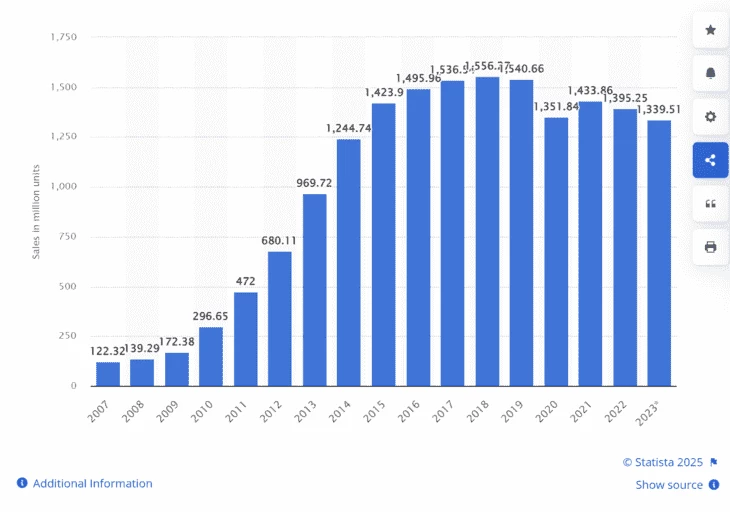
Number of smartphones sold to end users worldwide from 2007 to 2023 (in million units) (source: Statista.com)
But that’s only just beginning. Another recent study revealed the detrimental effects of scrolling through endless streams of social media content before bedtime. The outcome is predictable: the more you use social media, the more emotionally attached you are, the worse your sleep becomes, which might eventually entail severe insomnia.
Top it up with the onslaught of information you (don’t) need. Whenever you open your favorite app, you get thrown into a relentless ocean of personalities: Kim K with another backlash; Taylor Swift with another tour; someone mentioning a feud between two companies, Sam Altman’s interview… you consume news without thinking, which blurs your mental clarity. While celebrity feuds may provide an amusing read, other, more disturbing pieces, may seriously affect your mental health and trigger an influx of negative emotions.
The rest requires a little logic: your brain can only process so much at once. Constant exposure to trivial updates and distressing news creates cognitive overload. It fragments your attention, drains focus, and leaves practically no room for reflection, creativity, or genuine rest. In other words, social media, no matter how harmless these apps may seem, chips away at your mental stability, and the best way to restore it is to try digital detox.
Promote or Not Promote?
You may or may not notice that many people are struggling with digital detox: flashy content, no matter how overwhelming, remains incredibly enticing and continues to lure hordes of users eager to know more about their interests — coming-of-age shows, true crime podcasts, games, music industry controversies, and other bits brought into their feeds by omnipresent algorithms. While social media platforms often promise connection, entertainment, and discovery, they nonetheless tend to blur the line between mindful engagement and compulsive consumption. As a result, users have difficulty disengaging — even though they often admit the toll on their attention, time, and mental stability.
However, digital detox can — and should — be promoted as a conscious practice of reclaiming attention, a balanced approach to digital life, or a sustainable habit integrated into daily routine. You, as an affiliate marketer, team leader, or otherwise successful entrepreneur, can guide your audience towards tools, services, and practices that will eventually build trust between you and your audience. Essentially, you can make it work for you and your audience: you can create a screen-free campaign or offline weekends to motivate yourself to stay away from your computer and create a shared experience with your subscribers to help them remain motivated and follow suit. To do that, however, one should be aware of the most popular digital detox practices — and we are uncovering them below.
Brain on Airplane Mode
Luckily, most side effects of doomscrolling are reversible. Of course, some techniques might spark aversion in you (it’s hard to refrain from scrolling Reels late at night — guilty!), but they are nonetheless essential to improve your wellbeing and enhance your productivity in the long run. Besides, the holiday season is just around the corner! Cram everything into one day to avert your attention from the media.
Digital Curfew
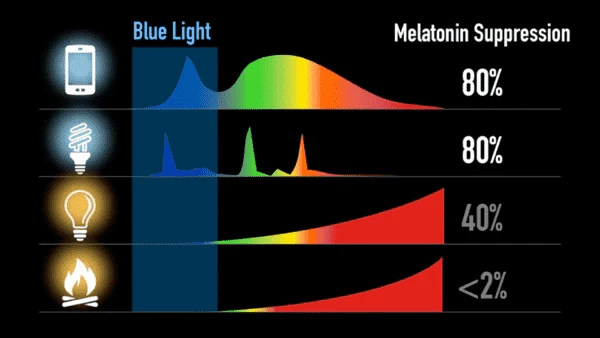
Sounds crazy— especially for a digital marketer working around the clock — but your phone has to go if you want to truly unwind before you go to bed: it is common knowledge by now that blue light from screens suppresses melatonin production, and melatonin is a hormone that plays a key role in sleep.
The simplest trick to impose a digital curfew is to leave the phone charging in another room, or at least farther from your nightstand than usual. If that doesn’t work as planned, buy a traditional alarm clock (there’s a variety of them, from the most outdated to the most unhinged) or switch the phone to Do Not Disturb mode.
Goodbye, Notifs
Not all of them, of course. As notifications are the centerpiece of your job — you may be working with pop-ups and apps, and analytics tools are prone to sending notifications whenever something feels off — we can’t eliminate every single one of them. However, we can significantly limit their number and reward you with a refreshing feeling of mitigated anxiety and alleviated stress.
You can choose the socials that devour the most of your attention, for example, Twitter’s random chirps (some unknown person’s highlight! Wow, nobody needed that, thank you, Elon Musk!) or any other personal account. It doesn’t seem like much, but the fewer notifications you have, the rarer you reach out for the phone, eager to type another message to your friend, proposing to go watch Guillermo del Toro’s premiere this very moment.
Off with Technology
...for a while. After all, it would be exceptionally ruthless to send you down to the forest and watch you invent modern conveniences with an axe and a hammer.
But jokes aside, people, even the busiest of us, should create some technology-free space where we can communicate with others, read books, roam around the city, and just live life as it was intended before we concocted technology as a concept. It doesn’t mean you should exclude smartphones and computers for weeks on end; the point is to give yourself some space outside the internet and build meaningful connections with the outside world. For instance, you can grab a textbook and write a list of future plans at a cafe; take photos of the architecture in your city; call your friends, have dinner with your family, find a new hobby, or come up with another exciting activity that best fits your character.
Mindful Boundaries

Have you ever been sucked into a commenting spree, reacting to intentionally ragebait content? American “cooking” videos with unhealthy amounts of cheese and butter (as if their health insurance is free over there), Twitter’s incessant disputes, questionable AI policies, and celebrity controversies can mentally exhaust to an unimaginable extent — sometimes even work fails to do the same. If that is the case, consider unfollowing the accounts that persist and post videos that unhinge you and undermine your mental stability, block them, if necessary. It may seem overkill, but you’ll be surprised to find out that such allegedly minuscule details can distort your vision and affect your mood, especially if you are a sensitive person.
Get Yourself a Hobby
Preferably, the one that does not imply sitting in front of the computer, so video games are out of the question. You can try yoga to shift your mental focus within yourself; you can pick up jogging to take some fresh air; you can boost your creativity by attending art classes and clay workshops; or you can test something previously unheard of: stained glass, aroma lab, haute cuisine recipes, print design, or anything else that strikes your fancy. Admittedly, you’ll have to spend some time online looking for a masterclass that fits the bill, but imagine where it can lead you in the end.
Wrapping Up
Using a phrase from an old meme, digital detox is not a want, but a need. We spend hours behind the desk, switching screens of various colors and sizes: the bad, unfriendly screen at work is eventually swapped for the good, friendly screen at home, the difference being the content we see — sheets replaced by YouTube videos. Smartphones only aggravate the situation: whenever we try to distance ourselves from the Big Screens, we get an annoying notification we cannot ignore — and eventually get sucked into the rabbit hole of socials. There is only one way to avoid this and break the cycle: implement digital detox strategies that help you reclaim your focus and allocate your time to tasks at your own bidding, not at the mercy of constant digital demands.