Traffic Cardinal
wrote February 11, 2026
Traffic Cardinal
wrote February 11, 2026
Traffic Cardinal
wrote February 11, 2026
Traffic Cardinal
wrote February 11, 2026
Breaking news, stop the presses! There’s growing public outrage over… AI ads.
They may look smooth all they want, yet the brain senses this emotional weightlessness and goes: “Nah!” Users scroll by because they’ve gotten very good at spotting effort that didn’t cost anything. You don’t have to be a purist or a tech critic to get the ick when you see just a prompt where there should’ve been intent.
This technology sped up everything: creatives, copy, deployment. However, low-cost persuasion can make you lose the plot along the way. Big brands are learning this lesson in public: their ad failures make it into the headlines, followed by campaigns being pulled and statements issued. Affiliates learn it privately, through worse numbers.
But it doesn’t have to be like this.
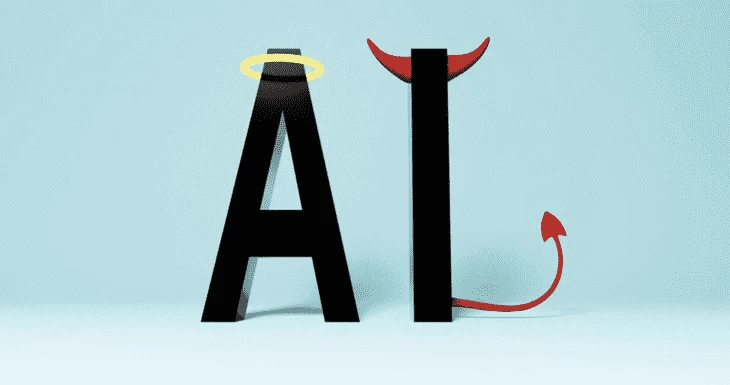
Today, we’ll get to the bottom of where others already stepped wrong and try to understand how those digital assistants you use in good faith might actually be working against your text and visuals. Let’s stay on the productive side of AI together, read on!
Why AI Looked So Good at First
Just admit it: that first hit of AI, followed by watching it level up at an insane rate, had a lot of us convinced we'd found a god-mode cheat code for real life. For marketers especially, it felt like a blessing – faster production and cheaper content, which, in turn, translated into smaller budgets and campaigns launched at record speed. Hard not to get excited, isn’t it? And to be fair, some of that excitement was justified.
We’ve already covered how AI can speed up affiliate workflows in our interview with Aryan Ahuja. Research, idea generation and routine tasks – AI handles those well, let’s not even debate it. Use it wisely and it’ll plug the biggest time leaks

The problem is what comes next. Aryan has been very clear about this part, even though such an idea is rarely quoted: not everything should be delegated. Some things should never be.
To be clear, we are not here to judge. It all still depends on who is using AI, how and what they expect it to replace. But let’s not forget that what looks like saved effort upfront might result in hidden costs later – in performance, trust and control. Before anyone freaks out, pause and take a breath. Feeling better? Then it’s time to map out the risks while they are still theoretical.
Text Content: How AI Kills Your Traffic
Question one: do your conversions depend on organic traffic? Question two: do you carelessly let AI handle copy? If you answered both affirmatively, we’ve got bad news for you… It’s borderline self-harm.
Yes, for a while, everyone hid behind the same excuse: AI-written content isn’t banned, therefore it’s fine. This old logic was comforting and… technically true. However, according to Affiverse Media’s analysis of Google’s guidance, the issue has never been how content is produced but rather what kind of content it is. Search engines don’t really need to “detect AI” if they can just measure how people interact with the content. Readers like it to be helpful, original and experience-based, if it’s not – they won’t linger on it. Come to think of it, how can AI write a review if it never used the product or compare things if it has no opinion of its own? It’ll inevitably read as empty and unconvincing.
If your funnel starts with SEO (content sites, review blogs, prelanders), getting downranked is going to be rough. Because what follows is fewer clicks to test with, thinner data, slower optimisation and, eventually, worse terms when you talk to advertisers, as you no longer control volume the way you used to.
So is AI really bad at writing? We’d say people are, the moment they accept the first draft and hit publish. They are missing one important detail: search engines and readers still care about lived perspective and judgment. Once this human touch disappears from your texts and ad copies, traffic, sadly, follows.
Visuals: When AI Creatives Hit the Uncanny Wall
Question three: is efficiency the only thing that matters in advertising? Our take is: if it were, we’d all be staring at the graphs and tables full of numbers instead of people’s faces, bodies, homes and lives. For the ad to work, it has to be some sort of psychological anchor, a belief that there is human intention behind what we see – someone chose this shot among ten others or decided this was the moment worth showing. Unfortunately, AI might ruin that assumption.

We wish we were making this up, but a study published by Nature proves it. They found that even a simple “AI-generated” label reduces how creative and valuable people perceive an image to be. And that’s before they’ve even processed what they are looking at. For ad creatives, whose job is to look worth a second glance, it’s a major blow if you ask us.
Question four: is your ad obviously just another prompt? Then people are gonna ask themselves a very fair question five: why should we spend our time on this if the marketer couldn't be bothered to spend theirs?
Even now, with much better image and video models, AI still struggles with a decent level of realism and real-world logic, because those models are not grounded in physics or anatomy. They approximate them. And here we stumble upon that uncomfortable sense – the uncanny-valley effect. Real, but not quite. Ads win over people through emotional connection, one way or another, but once they notice these subtle distortions, this connection collapses and your ads dissolve into the background.

Brands and Their AI Backfires
We are not dunking on those brands (they’ve taken enough heat already), just want to show scenarios affiliates should be aware of. Each campaign failed in its own special way, with something feeling off just enough to blow up in public. Let’s unpack a few of those AI advertising hiccups together.
McDonald’s Netherlands tried to be ironic about pre-Christmas chaos and stress. They released a fully AI-generated video and showed people stumbling through December like some kind of endurance test. The soundtrack was changed from “It’s the Most Wonderful Time of the Year” to the most terrible one, inviting people to McDonald’s as a place to hide from all the madness.
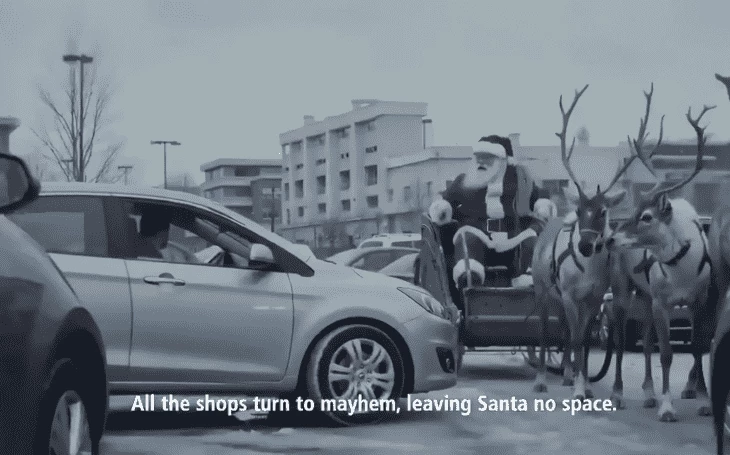
Well, the audience didn’t find it funny. Not that they are a tough crowd… The thing is, people want magic in December, and this creative team gave them anxiety rendered through slightly disturbing AI visuals. And if the idea itself was brainstormed with AI (which wouldn’t be surprising), then this outcome makes even more sense: models don’t experience holidays, they can’t know all this stress is also a part of a joyful ritual. Someone still had to greenlight it and this is where it went downhill.
Commenters called it “the most terrible ad of the year”, mocking the song choice and pointing out that if they were hiding from holiday chaos, McDonald’s wouldn’t exactly be their safe space. The ad was quickly pulled (only reuploads remain) so the backlash was contained, but the aftertaste wasn’t… yummy.
However, sometimes you can do everything by the book as a marketer and still get burned by the platform you display your ads on. Apparel brand True Classic discovered that Meta’s Advantage+ system had swapped its top-performing ad (a millennial guy in a fleece set) for a cheerful, clearly AI-generated granny sitting in an armchair (wearing a set, though – at least this part the system got right).
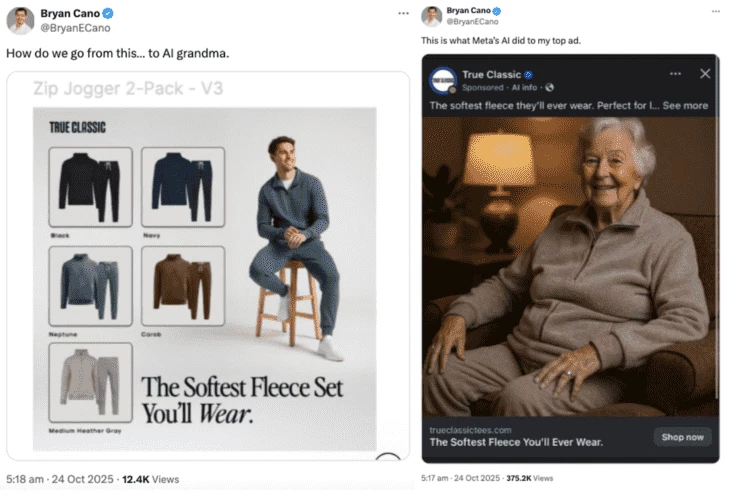
According to reporting by Business Insider, several advertisers said AI image-generation toggles were automatically switched on, even after being manually disabled. Sadly, this meant the real budget went to creatives they never approved.
So the backlash here was about control – advertisers didn’t plan on experimenting with AI, but still unknowingly outsourced their ads to it. We can only imagine how much worse this could’ve gone if it weren’t men’s apparel but, say, a bikini brand. Grandmas really don’t deserve that kind of exposure.
AI took airbrushing to its logical extreme, and H&M decided to test what happens if you skip the photoshoot altogether. The brand announced plans to create “digital twins” of 30 real models, whose synthetic images could be used in ads and social posts.
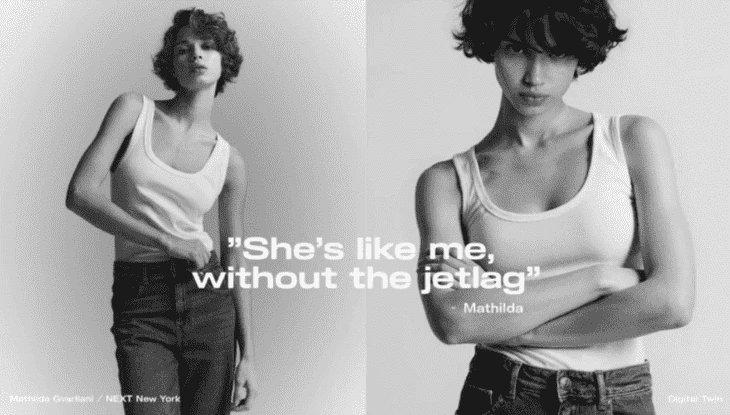
The models, of course, will own the rights to their twins, which sounds fair… on paper. This initiative raised critical questions about everyone else being removed from the process: make-up artists, stylists, photographers and other creative workers, whose labour would now be devalued.

Levi’s also started using AI models, but for diversity reasons – to show more body types, ages and skin tones on their product pages. Public reaction was negative: the brand was accused of using synthetic bodies as a fast lane instead of paying actual diverse humans. So the result turned out to be less progressive than it was supposed to.


Both cases uncover the same tension. Brands love perfectly controllable talent, but the opposite side of it is that audiences smell the control and start doubting everything else they are being shown.
Backlash Boomerang and Anti-AI Campaigns
While other brands were busy defending their use of AI, a few leaned into the growing irritation and made it a part of their message. And affiliates can learn from that.
The ad by Equinox contrasted obvious artificial fantasy with real physical effort.
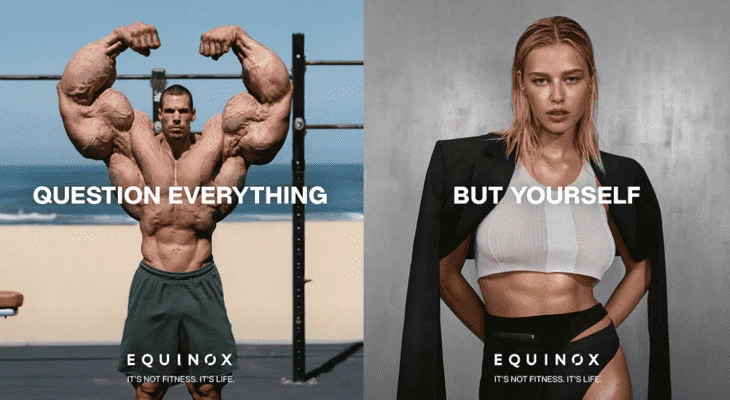
Krish Menon from the Angry Gods agency, who helped the brand with this campaign, described the idea like this: “You can fake looking fit but not being fit. You can do a lot in photos, but you won’t feel better.” This way Equinox let the audience do the comparison themselves and made “real work” the product.

Polaroid takes aim at black mirrors and AI, reminding people what their cameras were originally for: capturing unfiltered real-life moments. The idea is just to be there while it happens, because, realistically, nobody on their deathbed ever thinks “Damn, I wish I’d spent more time on my phone!”
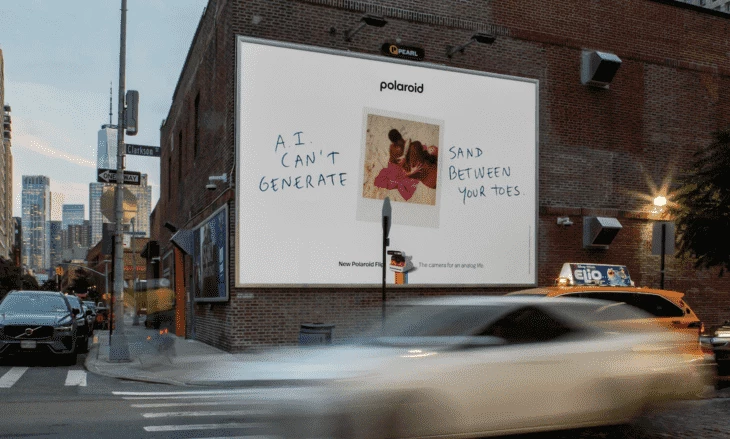
In this context, their anti-AI ad is a part of a much broader trend – cravings for analog experiences and nostalgia people feel living in an overly digital world.
After watching H&M and Levi’s trip over synthetic bodies, the clothing brand Aerie went the opposite way and publicly pledged to stay “100% Aerie real”, promising not to use AI to generate images of people or bodies in their campaigns. It was an extension of their long-running (since 2014) no-retouching promise into the generative reality we have to live in now.

So What Do Affiliates Do With All This?
You came here for the practical part, didn’t you? So let’s skip the theories and go straight to what’s worth using and what’s better left alone.
Do:
Use models to generate a lot of raw angles and hooks only to later manually select variations worth testing (usually around 10% out of the initial bunch). Sad but true – most of what AI produces should never go live.
Get very specific with your prompts and spell out the characteristics of what you want to achieve in the end. Format, context, length, forbidden structures mean a lot for AI to produce usable material, because, let’s be honest, it can’t read your mind. At least, for now, haha.
Let AI handle simple technical work like basic prelanders or page layouts. We really doubt users will bounce because “this HTML looks generated”.
Clean up AI images before you ship them. Yes, the latest models don’t mess up fingers as much, but they still can’t help but add glossiness and oversaturated “Disney poster” colours.
Invest in decent AI voices if you are going to use them at all. By now, everyone is sick and tired of free sets of TikTok robot voices they heard a million times.
Don’t:
Launch raw AI creatives without a human taste check. In real split tests, copy written by a human still beats AI output. Of course, if you are targeting people, not bots (the latter will click anything). If your team members look at the ad and it doesn’t trigger any reaction (good or bad) – it’s a cause for concern.
Let AI draw text inside images: speech bubbles, signs, buttons, UI screens, because models still butcher lettering. You can always add text later, with real design tools, otherwise you’ll end up with cursed gibberish.
Pretend AI understands culture. Surprise, surprise, machines can’t meme, crack niche jokes or elegantly add cultural references (this is how you know this exact article is written by a human, wink!) So if your marketing angle depends on this sacred knowledge, give it your best shot on your own.
Ignore bias just because the result you got looks normal. Models sneak in strange defaults: diet talk sliding into moralising, awkward diversity overcorrections in visuals and so on. So you’d better watch for them leaking into content, especially in sensitive verticals.
AI: Yay or Nay, Niche by Niche
AI use, especially in visuals, is more or less acceptable depending on the niche. Some images or videos can be harmless in one context and damaging in another. Let’s settle this once and for all.
The least controversial place for AI creatives, as you might have already guessed, is adult. Here the offers are based on fantasies by default, so audiences don’t expect documentary-level authenticity in the same way they do elsewhere. Besides, animated characters are hardly a novelty in this genre, and AI simply introduces another art style, bordering hyperrealism. Generated models and avatars are okay, as long as you don’t pretend they represent real people. To sum it all up: if you decide to use AI creatives, don’t bait users with something human you can’t really deliver.
By the way, many popular AI models actively restrict or refuse 18+ prompts, so if you want to know which ones are still usable in the adult vertical, we’ve covered that in our AI model comparison overview:

Wellness, nutra and beauty are also body-related, but here AI needs the tightest leash. Don’t get us wrong, abstract lifestyle visuals with healthy routines and “I’ve got my life together” energy are all fair game. But if you fabricate snatched bodies after weight loss or glowing skin transformations, that’s deception. Do your creatives imply a real journey with personal results? Then AI should be nowhere near it.
Unlike adult offers, in dating, fantasy only goes so far. AI visuals can work at the ad level if they sell a vibe: romantic atmosphere, emotions, the idea of connection. But if the ad contains generated faces presented as “real singles near you” or, God forbid, deepfaked photos stolen from real people who never consented to be there, you are in trouble. The first one is misleading, the second is illegal and, anyway, nobody signs up hoping to talk to a synthetic person or something scraped from the internet.
Finance audiences are unusually sensitive to any kind of bullshit lie. For offers like trading, crypto or investing, AI is tolerable only for design polish or (we know, we’ve repeated it a lot in this section) abstract visuals. Conceptual charts, diagrams or graphics explaining ideas are also fine, but you must clearly mark them as illustrative. A big no: fake profits, imaginary dashboards, insider success stories that never happened or (that’s a cheesy one) an AI-generated guy flexing a Lambo as proof of success. You won’t get your credibility back if you step into that territory.
Using AI in betting and gambling offers is fine if you do it for decorative purposes only. This niche has a very specific visual DNA, so using anything bright and flashy to recreate an adventurous mood (again, strictly abstract) won’t cause any issues. The fraud zone starts if you generate fake slips or imaginary “look what I won yesterday” stories. Users might not know every regulation by heart, but they know when they are being sold a fair chance versus a fairy tale.
Conclusion
We’ve already seen how this plays out when things go wrong. Big brands experiment with AI, misjudge the mood, absorb the backlash, issue a statement and move on. Affiliates don’t get that buffer. There’s no PR team between a bad creative and lower EPCs or patience from Google when rankings start to slide.
This article is not advocating for being anti-AI or doing things the old way. All we’ve ever wanted is to be practical. And that includes learning from mistakes made with other people’s budgets. AI will keep getting better, it’d be foolish to deny it. But so will users recognising when it’s being used carelessly. So the safest option we are all left with is to move deliberately and with context, instead of rushing ahead or digging in our heels. Brands can afford to find the edge by falling off it. Affiliates don’t need to repeat the fall to know where the edge is. Hope you see this edge more clearly now.