Traffic Cardinal
wrote December 03, 2025
Traffic Cardinal
wrote December 03, 2025
Traffic Cardinal
wrote December 03, 2025
Traffic Cardinal
wrote December 03, 2025
So, Telegram. That “messaging app” you thought was just for memes and group chats. Meanwhile, it’s been mutating into something businesses are starting to eye like: wait, is this the place we should be connecting with people?
Already rolling your eyes, thinking “great, another marketing channel”? Well, yes, but also no. If you are sick of the social media noise (aren’t we all?), this place is oddly… clean.
Curious or still skeptical? Either way, we’ve got some Telegram marketing tricks to share. Promise: it’s a better alternative to pleasing algorithms and begging for likes on platforms that don’t even like you back.
What Is Telegram Marketing?
“Telegram marketing” might sound like a phrase cooked up by business sharks at some A-list conference. But all jargon aside, just think how refreshing it would be not having to fight for scraps in overcrowded feeds anymore once you try it.
Get this! Channels blasting out updates to, well, as many followers as you can gather. Groups big enough to rival small cities (up to 200,000 members – no joke). Chatbots politely answering the questions you’d rather ignore at midnight. Voice and video notes (circles), messages, stickers – all flying even when your Wi-Fi is gasping for air. It’s all there, without clogging your storage, thanks to its cloud-based system.
And people trust it. Because here the algorithm doesn’t get to play god. Telegram is fast, flexible, and – most importantly, in this age of constant data leaks – private. Frankly, we’d say it’s the anti-Facebook. Surprised? Yeah, us too.
Why Use Telegram for Marketing?
Telegram audience is far from being some watered‑down soup like other socials, where you have to fish around for a stray carrot. Apologies for the culinary tease, should you be digesting these words on an empty stomach. Anyway, the point is, it’s more of a concentrated broth. It’s huge, as in hundreds of millions huge, worldwide – breathing, scrolling, tapping. Despite those big numbers, communities seem to be tight and focused. So, if we continue with our gastronomic analogies, Telegram promotion lets businesses ladle straight into bowls of people who actually want a taste.
As for engagement here, you won’t be showered with fake thumbs-up. Because thanks to Telegram’s obsession with privacy (that is, encryption, minimal tracking and no creepy ad‑stalking), users feel safe, so they actually talk. And brands can naturally slip into this trust bubble as part of the conversation. Bonus feature: admins can message subscribers directly. Which means there won’t be any exposed phone numbers or awkward “who gave you my contact?” moments.
Now, let’s talk money. Or rather, the lack of it. Telegram marketing services are cheap. Like, suspiciously cheap. Channels, groups, bots? Free. Ads? Cheaper than the mainstream, yet somehow more visible. So for budget‑conscious marketers reading this – rejoice, you’ve found your loophole.
And formats… Oh, the formats. Telegram doesn’t stop at text. You’ve got photos, videos, voice notes, polls, stickers, bots – take your pick. Then they went and added stories and mini apps, because apparently all of the above wasn’t enough. Real‑time updates, interactive experiences, endless ways to keep audiences hooked. And yes, people keep coming back for seconds. Or thirds. Or… Well, you get the idea.

How Telegram Marketing Works
We already name‑dropped some Telegram marketing tools earlier – channels, groups, bots, ads. And now, yes, we have to actually discuss them.
Channels. Telegram channels are “broadcast‑only” lanes. You talk, people listen. Businesses treat them like a newsfeed – drop updates, promos, any kind of content, and it flows straight to unlimited subscribers. Plus, everything stays on‑brand and predictable, no backtalk. Is it a little sterile? Probably. But sometimes that’s exactly what you need when you’re trying to look professional while talking to the big crowd.
Groups. Groups are the opposite of channels. It's not you talking, it’s everyone talking. Two‑way conversations, real time, no mute button. Up to 200,000 people in one space (yes, we mentioned that number before, but it still feels absurd), all tossing questions, feedback, jokes and complaints. Messy, no doubt about that. However, loyalty hides in the mess. And so do insights – sometimes more than you wanted, sometimes less, but always raw.
Chatbots. And then – chatbots. Not the sexiest feature, but hear us out. They handle the boring stuff and don’t ask for a raise. FAQs, order tracking, quizzes, all day, all night. These bots lighten the load for support teams, sure, but more than that, they keep users entertained and guide them through services while being smooth and polite. Very convenient.
Stories and Reels. Stories and reels are the "don't get too comfortable" feature, because the content is here now, but then it's gone before you even decide if you liked it. Businesses toss out behind‑the‑scenes clips, quick promos or whatever they can squeeze into a disappearing frame. And people scroll faster and watch closer, because they know it won’t last. Real‑time engagement spikes and brands feel fresh and unpredictable. Ain't that marketing perfection?
Telegram Ads. And finally – Telegram Ads. They blend with organic content so well they are barely noticeable, hiding in plain sight without wrecking the vibe. Thanks to precise targeting, they hit the right people and still manage to push growth. Users scroll, read, think “wait, was that an ad?” and by then it’s too late – they are already engaged. Telegram advertising in all its glory. Or trickery, depending on how cynical you are feeling.

Setting Up for Telegram Marketing
Okay, we see you are intrigued and ready to learn how to use Telegram for marketing. Happy to hear that! But first, the boring part. Download the app, register with your number and wait for that SMS code you’ll inevitably mistype once. Then comes the profile: name, logo, description – the holy trinity of “please take me seriously,” so customers know who you are and don’t confuse you with a meme account.
And after that, the real game begins – channels or groups. Public if you want exposure, private if you want exclusivity or both if you’re greedy. Give it a name, a description, something aligned with your goals (whatever those are today). And then – content. Don’t even think about ghosting your audience: stay active, update regularly, keep posts engaging, sprinkle in keywords from time to time. That’s how you grow.
Good, you've got the account. Now dress it up. Bots to automate the routine – welcome messages, FAQs, notifications – because who wants to do that manually? Stickers to humanize and make the chat feel more alive or even funny. Smart links to nudge people toward promos, partner offers or anything you are planning to sell. And don’t stop at the basics, your profile can flex harder: opening hours, contact buttons, quick replies, what not. All these little touches make customers think “ah, this brand actually has its act together”.

Building a Telegram Marketing Strategy
First things first – goals and KPIs, the inescapable part of any Telegram marketing strategy. Decide what you want: subscribers, engagement, traffic, sales... Pick one, pick all, but pick something. And then make it measurable – 20% growth in 3 months, higher interaction rates, something you can point to later and say “see, we did it".
Next, the audience. Who are they? Use analytics and Telegram marketing software to stalk their demographics, interests and behaviours. Because if you don’t know who’s listening, your content is just talking to yourself.
Here’s the part where we say “align your content strategy with goals and audience.” Translation: don’t post random junk. Decide what you’ll share and how you’ll sound. Your tone can be casual, expert, friendly or all three depending on the day. And then schedule. Warning: be realistic enough to keep you active but not so manic that subscribers start muting you.
Last step: don’t let Telegram sit alone in the corner. Fold it into the bigger picture, along with a website, newsletters, socials, so that your brand seems to be everywhere at once. Exclusive drops here, campaign announcements there, you know. What can we say – it's how online presence is built.

Promoting Your Telegram Channel or Group
Growth on Telegram doesn’t happen in a vacuum, so if you want to know how to promote your Telegram channel, our advice here is to trade favours. Partner with channels orbiting the same audience, swap shoutouts, drop collab posts, so that your brand starts showing up in places it didn’t belong yesterday.
And as we mentioned earlier, Telegram alone won't carry you, that's why you'll need to tie it into the rest of your ecosystem – site, socials, emails, anything you are currently running. A link in the footer, a button in the bio, a reminder in the feed – subtle repetition until bumping into you feels inevitable.
Then there’s the influencer card. Play it right and you’ll borrow their credibility and loyal crowd. Exclusive drops, giveaways, shoutouts, but only with those who fit your brand, not just whoever has numbers.
Yes, Telegram also has its own ad system – sponsored posts blending into channels and letting you target by all the usual data points. We’ve already mentioned the mechanics, so no need to dwell. The point is to use them when you want a quick push, just don’t forget about A/B testing to keep the spend lean.
Now let's admit Telegram isn’t the whole universe. External ads – Google, Meta, TikTok – can push your reach further. We know this article is supposed to be about how to do marketing on Telegram, but come on, cheating with outside ads won't hurt. In fact, it's smart: different platforms, same goal and more views funneled back into your channel.

Engaging Your Telegram Audience
Interactive Content. If you want people to stay with you (really stay, not just drift by because the algorithm shoved your post in their face) you’ve got to give them something they can poke at. Because otherwise they’ll just skim and leave and you’ll be staring at a flat line asking yourself “What went wrong?” Polls, Q&As and small giveaways you keep postponing… All of that makes the audience lean in and say “Alright, I’ll click this thing”. And once they do, you finally get honest numbers and feedback you’d never get in a simple survey. You also get a better idea of what they like, even if sometimes the results are weird and make you question your entire content strategy. But hey, that’s the job!
Community Discussions. If your community feels quiet, it’s probably because everyone is waiting for someone else to talk first (which is ridiculous, but that’s human nature). So you have to break the silence and say: “Alright, you! Yeah, you! What do you think about this?” Ask for opinions, weird ideas, gripes, unfinished thoughts, literally anything to force people out of spectator mode. And you’ll see (believe your eyes), when someone finally speaks up and others jump in, the room’ll start warming up. Readers will treat your space like it’s theirs (it’s only logical, because now their voices are in it) and that’s when the community stops being a collection of usernames.

Personalisation and Automation. People know when they are getting the same message everyone else got, and they tune out fast – we’ve all done it. When we tailor things to their habits or quirks, they stop skimming and start paying attention because the message speaks their language. And before anyone panics about the workload, relax! We're not planning to handwrite welcome notes at midnight. Automation picks up the repetitive stuff we always swear we’ll “get to later” but never do. The bots will run the background chores and we’ll keep the human parts human.
Quick Responses. You know how it goes: someone drops a message, waits… waits… and then poof, they are gone, off to someone who didn’t leave them hanging. Life happens. But when we jump in fast, even with a quick “hold up, reading this”, people perk up. Oh wow, they are awake! Which shouldn’t be impressive, but here we are. Telegram loves that sort of energy, so the admins who answer fast get talked about in all the right ways. It’s funny, isn’t it? Just replying becomes part of the brand. Wild!
Measuring Success on Telegram
Built-in Analytics and Stats. Measuring how well we are doing on Telegram starts with, you know, actually looking at the numbers the app hands us. Shocking, right? Subscriber jumps, post views, the weird spikes in reactions making us wonder what on earth people liked that much – you can find it all right inside the analytics panel. Instead of tea leaf reading from your morning mug, it gives you a quick check on whether the channel or group is moving forward or just kind of… hovering. Keep an eye on those numbers and you’ll start seeing patterns in how people behave and which posts are accepted better (or worse, who knows) than you predicted.
Bots and Third-Party Tools. However, Telegram’s built-in stats hit a ceiling pretty fast. At some point, we’ve got to face the truth – this isn’t telling us enough. So we drag in a bot or two, maybe some external Telegram marketing software and start peeling back the layers of data. Tools like Telemetree or Popsters may open up way more than we expect. They can break people into little clusters and show how they bounced around our posts, who bothered to stay and which messages traveled further than we initially planned.
ROI and Strategy Adjustment. ROI might be a dry MBA word, we get it. But wait until you are trying to justify why you spent a week on a campaign that got… What, three clicks? Sooner or later you’ll have to look at your posts and ask the uncomfortable question: “Did this do anything or were we just vibing?” We try to match the data to the results we care about and, of course, something random usually outperforms the thing we spent hours polishing. The best decision once you spot the real workhorse is to feed it and put pretty but deadweight content on a diet. Don’t water the plastic plants, end of story.

Telegram Marketing Trends in 2026
Once upon a time, Telegram looked at every brand using spreadsheets to manage customer messages and said: “Okay… absolutely not!” It’s not a fairytale, but rather a true story about how Telegram Business Suite came to life. Tidy business hours, canned replies and automatic messages – everything you’d expect from a platform tired of watching marketers improvise.
As for Mini Apps… Oh boy! Now your users can book, buy and pay inside the app before they have time to second-guess their decisions. Because why send people to a website or make them go through multilevel onboarding when you can keep them right here, in your own shopping mall? Smoothness is Telegram’s second nature, no kidding.
Speaking of trends and innovation, Telegram’s TON and Web3 definitely have that “hey, mind if we revolutionize things real quick?” vibe. Crypto transactions, decentralized mini-apps and other high-tech words nobody admits being clueless about. Brands who get in early will look like geniuses later, trust us on that.
Stories on Telegram are also blowing up: brands and creators get a chance to drop something quick and maybe a little unfiltered, and due to disposable nature, everyone pays more attention than they ever did to the fancy posts marketers spent three hours formatting. Turns out audiences like real humans… Who could have guessed?
Money-wise, Telegram’s been busy. They rolled out subscriptions, tips and sponsored posts because no creator can survive on hugs and kisses. About time! If you always wanted to turn your Telegram channel into something more profitable than a hobby with too many notifications – take that chance.
AI has also been having the time of its life for the last few years and Telegram was quick to pick up on that too. It watches everything (not in a dystopian way, just… closely) and twists the feed into something each person enjoys. And surprise, surprise: when people get content they care about, they keep coming back.

Successful Telegram Marketing Examples
Telegram has become one of the loudest marketing channels on the planet, especially if you are anywhere near crypto, tech or news. Exchanges like Binance and Blum basically live there now and the whole crypto crowd treats Telegram like their command center, full of live updates and limited promos.
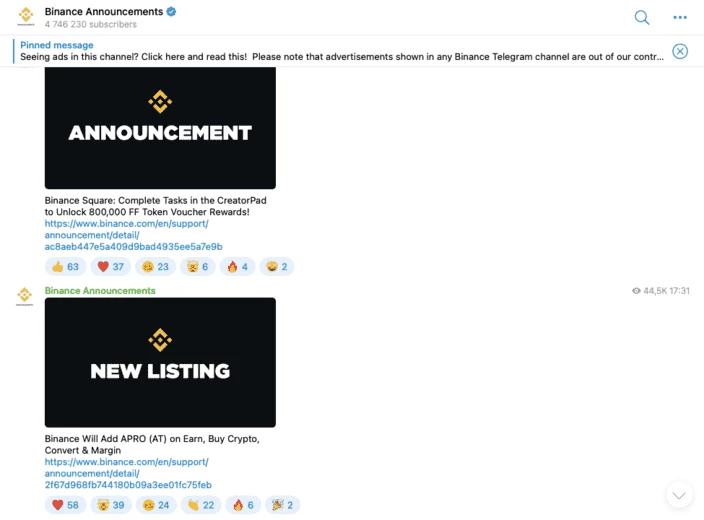
Even The New York Times and The Washington Post are in there! They drop compact news hits and subscription hooks straight into people’s chats, because why not? Apparently, users like getting the world in tiny chunks.

However, outside those global categories, the platform is still dominated by giant Russian brands and communities. It’s a side effect of Telegram’s roots, that’s just how it is. Fascinating, but it also means not every Telegram marketing example applies worldwide. What it does show though is that this platform can support huge channels and groups when someone actually puts in the effort.
But let’s forget about those local Slavic communities for just one second, they are irrelevant right now. Here’s a fun fact for you: half of the biggest English-speaking channels you see on Telegram aren’t even official. They are fan accounts, deal hunters, content pirates, motivational-quote writers – channels with massive followings built by people who do not work for the brand at all. Netflix clips, TED Talks or random “best course ever” leaks – none of that comes from the source.
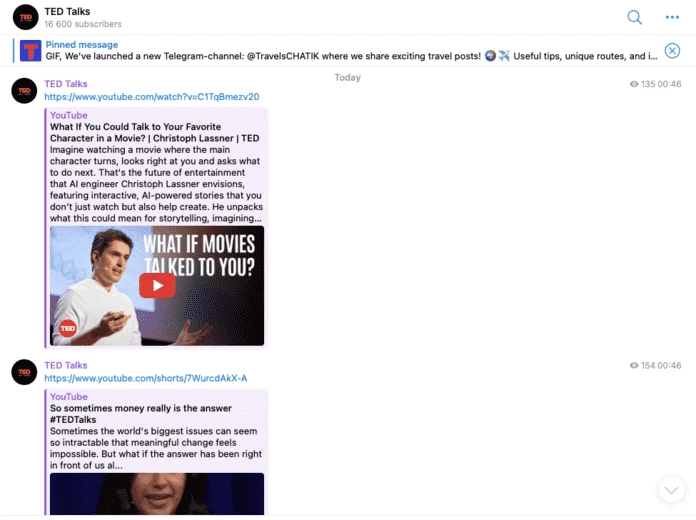
We have a weird paradox on our hands: huge audiences gather around unofficial versions of official things. Which means the first brand that steps in with a verified channel and even a halfway decent strategy will instantly look like the adult in the room.
Put all this together and Telegram seems like wide-open territory. Yes, crypto and tech may dominate now, but beyond that there are many unclaimed niches for brands bold enough to try something new. So strike while the iron is hot or, in other words, while Telegram is still raw and flexible.
Final Thoughts
Telegram is giving brands tools that make real engagement… well, possible again. Bots, mini apps, all the creme de la creme of tech stuff – they can really help you grow and prosper instead of getting in the way.
Crypto, tech and news teams got here early, sure – but everyone else? The place is practically empty. Most brands haven’t even claimed their space yet! It’s wild, because the bar for an official, well-managed brand presence is laughably low right now. Easy opportunity, too unfair to miss.
So no, you don’t need to “wait for the right moment.” This is the moment. You are ready to build the community latecomers will envy. Good luck!
FAQ