Traffic Cardinal
wrote January 19, 2026
Traffic Cardinal
wrote January 19, 2026
Traffic Cardinal
wrote January 19, 2026
Traffic Cardinal
wrote January 19, 2026
Every few years, people rediscover something they swore they had outgrown. It’s not happening because people forgot how progress works. It’s just… When the present feels unstable, we tend to seek comfort in the idea that someone, somewhere, already figured this out once – and lived with it.
At some point, most of us start looking sideways instead of forward and talking about “doing things properly” again. That’s why nostalgia keeps resurfacing in every corner of our lives. Things around us are framed as classic, timeless or “back to basics”. However, it has nothing to do with missing the good old days. If you look closely, you can see it’s a repeatable demand pattern.
Today we’re going to walk down the memory lane (and try not to romanticize it). We’ll look at why we are mesmerized by the past’s attributes, why they keep beating their new and improved successors and how affiliate marketers can apply the same psychological levers in any niche.
The Commercial Value of Familiarity
Nostalgia gets mistaken for plain old sentimentality way too often. You miss the past? And there it goes: “Look at you, all tender and emotional!” or “Wow, you are such a softie!” But that explanation is a bit lazy. Pretty much always, it’s about making a more predictable choice which is less likely to surprise you in a bad way. Familiar things come with a strange kind of reassurance, even if it’s mostly imagined.
The thing is that nostalgia rarely equals real memory and for advertising gurus out there it’s especially convenient.
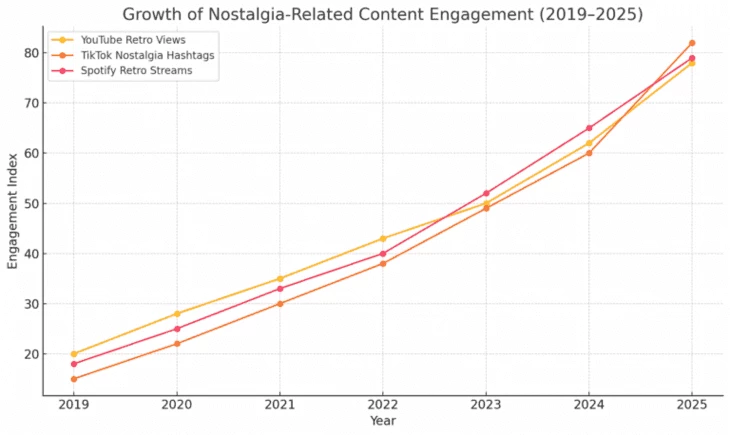
Growth of nostalgia-related content engagement 2019-2025 (source: Amra & Elma)
Plenty of people buying into a past era didn’t live in it. They are drawn to aesthetics, ideas or systems, though they never experienced the original version. And those who did remember them through rose-tinted glasses, mentally removing the boring and unsettling parts.
Due to this gap, the past gets as malleable as play-doh and marketers do the rest, making it simplified and idealised. And from a buying perspective, that changes the rules. Consumers make decisions faster and ask fewer questions. Ironically, they tolerate quirks and imperfections they’d never forgive in something claiming to be next-gen. Because nostalgic offers are intertwined with feelings and feelings are much easier to say yes to than specifications.
Monetizing Blasts from the Past
It’s tempting to pin nostalgia on certain periods of time, TV series, music albums or fashion choices. To tell you the truth, it’s much more promiscuous than that, finding its way to slip into all kinds of markets.
If you ask us, Stranger Things is hands down the most textbook case of nostalgia marketing we’ve seen lately. Yes, it told a great story (though plenty of shows do that now), but it also productized the 80s. Bikes, synths, malls, VHS fuzz got bundled into a purchasable atmosphere promising life before the internet ate our brains. The ripple effect this show created spilled into fashion, music, decor, Halloween costumes and whatever else could carry the vibe. The cultural aftershock was so huge that the plot almost became secondary.

This “falling for the past” pattern is hard to ignore and marketers know it like no one else does. Look at what keeps getting greenlit: reboots, sequels, anniversary editions, “legacy” franchises – they just refuse to stay retired. Even Harry Potter is being unpacked again, this time as a full series with a new cast. Very little of this has anything to do with creative risk, actually. You can’t possibly go wrong with all these extensions and careful resurrections because they are united by the very trigger we discussed earlier – familiarity. Recognisable means reliable, and from a marketing point of view this is built-in retention. A fanbase that already proved it will show up once is far easier to activate again, right?

The fashion industry figured this out long before streaming did. Decades rotate on schedule and yesterday’s embarrassment is viewed as a statement piece tomorrow. Vintage is no longer old, but rather approved by time. You don’t need to invent a new look when you can sell identity, belonging and past references people recognize at a glance.

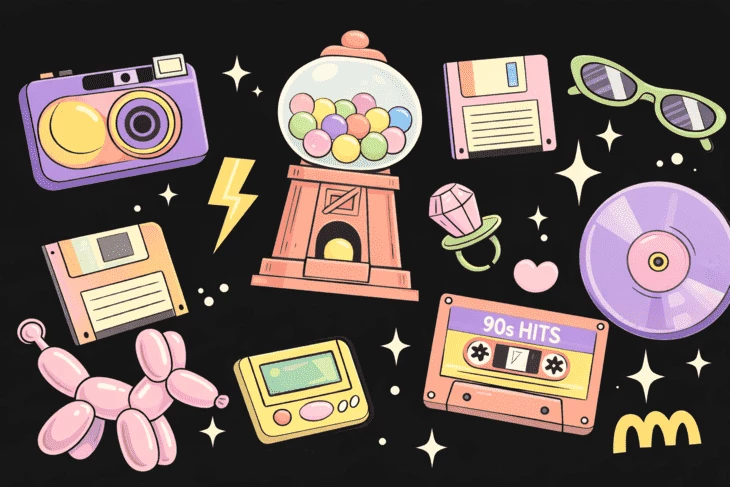
But nostalgia doesn’t stop at what we watch or wear, it’s also reflected in the objects we surround ourselves with. Film cameras and Polaroids come back, so that taking a photo is intentional again. Dumb phones promise freedom from notifications by doing almost nothing at all. Paper books, vinyl, analog formats of all kinds are promoted as a break from glowing rectangles. The feeling that your attention belongs to you again does the selling, and old tech just happens to be very good at delivering that illusion.

Lifestyle trends aren’t immune to nostalgia either. Handmade everything, from-scratch routines, baking, gardening, fixing things instead of replacing them – people are buying slow rhythm and usefulness as an antidote to abstract work and endless screens.

You can find glimpses of the past in travel too. Tourists are now opting for slow travel and meditative wandering. Getting lost on purpose, even, as a protest against over-planning. Over-documenting moments to patchwork them into content later goes to the same rubbish bin. In other words, they feel nostalgic for a time when travel felt exploratory instead of performative.

Education has its own back-to-basics moment. And no wonder, because some researchers warn that as analog skills disappear, basic abilities (attention, memory and reasoning) are slipping too. So parents and students rediscover handwriting, mental math and classical learning methods and find a renewed respect for the way things were before shortcuts.
And then there’s money. The part of life where uncertainty hurts the most. Finance follows the same reflex here. When the markets behave more like a casino, our attention inevitably drifts toward older and disciplined ways: rules, dividends and boring approaches that already proved they could survive chaotic times.
How to Engineer Nostalgia
So now you see this whole thing isn’t a coincidence or a one-off success story. Though nostalgia is often associated with some vibe which you either have or don’t, de facto it behaves much more like a system. And systems can be reused.
Step 1: Pick the Right Past
You are looking for something your audience recognizes, trusts and feels comfortable stepping into – a reference point they won’t be tempted to correct. The further calibration is rooted in the present – what is missing right now? It can be control, slower pace, privacy, things making more sense. Once you have figured out that “loss”, choose a past-shaped container promising to fix that feeling and provide relief. But be careful: if you only chase aesthetics and pick something just because it looks cool, your marketing campaigns might collapse into cosplay.
Step 2: Compress the Past into Symbols and Rules
The best way to monetize nostalgia is to edit it down. The past should be easy to read, borderline automatic, and to achieve that you need to meticulously choose just a few cues to carry all the emotional weight. Being too thorough and throwing an entire archive of references at your audience would be a mistake. You just need to evoke a feeling fast and stop there.
Step 3: Build Continuation Paths
We bet you’ll like this money-printing part: nostalgia is naturally serial. If you have a lead who bought a piece of the past once, chances are they’ll want the set. People get comfortable, look for a way to stay in the feeling a little longer, and your job is to design that path. One touchpoint leads to another, then another: the first step is easy and what follows adds depth and more context. This progression conjures the sense of getting closer to the “real” version of the experience. This way your audience is practically guaranteed to convert all the way down the funnel.

Applying Nostalgia, Niche by Niche
Okay, enough observing, let’s make it work! Every niche carries its own kind of nostalgia demand, that is, different things people want back in their lives. We, as marketers, need to translate that into funnels, offer stacks and content angles.
Ecommerce
In this niche, you are selling a break from disposable culture. Yes, we see how it doesn’t add up with the products being brand new, but forgive us this logical inconsistency, it’ll all make sense in a second. The thing is people are tired of replacing things that looked fine at first glance and then fell apart six months later. They want offers they can settle into, preferably without having to compare fifteen versions of the same object. Because product abundance feels like work these days. And that’s a problem we didn’t really have a few decades ago.
In practice:
Make it perfectly clear that the things you are promoting are meant to last. Focus on materials they are made of, warranties, their durability, maintenance and how they age with use.
Write your product recommendations and buying guides like a knowledgeable friend. The edge is “I’ve made mistakes, don't feel like repeating them and neither should you”.
Slow the experience down on purpose to give buyers more time to think. By this we mean featuring fewer products per page or limited-time nudges. Just to remind you again, abundance can be exhausting.
Stack offers to reduce future decisions. You can suggest accessories, refills, care tools or follow-ups, which will make it easier to keep using the same product instead of shopping again.

Finance
When it comes to money, you can’t hope to catch customers’ attention through aesthetic collages. But rules and discipline – now we’re talking. People aren’t looking for excitement here, their underlying wish is plain as day – they want to feel like they aren’t screwing this up.
In practice:
Talk about rules, simple ones. Rules mean fewer decisions and, hence, fewer mistakes.
Normalize slow progress with predictable behaviour and portfolios that don’t move much. This is what stability looked like in the old days.
Write content not to impress, but to calm people down. Explaining why staying put is often the right move will get you further than making everyone panic.
Be skeptical of fresh and tempting trends. Don’t lecture, just show how often new brings stress. This will give you an opening for promoting time-tested offers.
Build campaigns to support a financial routine – education first, then tools to make discipline easier, plus occasional reminders to keep people from doing something dumb with their money.

Gambling and Betting
Right after telling people not to gamble with their future, we arrive here. It would be ironic, but in this case the nostalgic angle reframes betting as something closer to skill and ritual, with self-control. So instead of making users want to bet more, it makes them want to bet better.
In practice:
Preach structure over excitement and offer familiar formats and clear rules, because people feel safer when they understand the boundaries.
Users should be confident instead of desperate, so you need to help them through basic guidance with strategy explainers and other “how it works” content.
Talk openly about discipline and restraint. When you normalize slow pacing and knowing when to stop, it makes users see you as trustworthy.
The experience should be calm and predictable, otherwise confusion makes people nervous and pushes them to bail quickly.
Dating
Nostalgia in dating doesn’t imply going back to an imaginary golden age where apps haven’t happened yet. Single people just want structure and intention in the midst of an infinite scroll of “maybes”. And affiliates can give it to them without having to undo modern dating.
In practice:
Limits should be presented as beneficial. Promote real connections like something that comes from fewer options and slower replies.
Spell out clear rules and signals, so that people don’t have to guess where they stand or negotiate their worth.
Give users content to play with as a couple, like conversation prompts or offline-friendly date ideas to move their relationship into the analog world.
Make offer sequences for deeper involvement, including coaching, memberships, events or retreats to reward real action instead of just browsing and swiping.

Education
Nostalgia in education is mostly seen when people get frustrated with modern ways of learning. It feels like they’ve been studying for years and somehow still don’t know much. Courses seem shallow and progress fake, not to mention that everything is optimized for speed instead of understanding. And what learners genuinely long for is real mastery.
In practice:
Credentials and certificates should be less important than actual competence. A framed document on the wall doesn’t always mean maxed-out skills.
Progress is something students have to earn, that’s why you need to highlight practice routines, drills and repetition in your offers to make learning feel real again.
Be clear about “back to basics” or else people will think they are supposed to use a quill and inkwell. To do it right, promise depth, that is, understanding things properly, from the ground up.
Apps, tools and courses should be marketed as steps in a longer journey. Once someone commits to learning something properly, they are usually ready for the next layer, as long as it feels like advancement.

Conclusion
The past sells well because it’s the only place where certainty doesn’t have to be proven. New offers, by contrast, need explaining and send people down the rabbit hole of research and endless comparison. That’s why the usual advice about better funnels often misses the point. What affiliates need is better time machines. Funnels optimize movement, yes, but nostalgia optimizes meaning. You won’t have to chase attention if you can give people a stable feeling in an unstable time.