Traffic Cardinal
wrote February 15, 2026
Traffic Cardinal
wrote February 15, 2026
Traffic Cardinal
wrote February 15, 2026
Traffic Cardinal
wrote February 15, 2026
It’s February and your feed knows it – everything is red, pink and shaped like anatomically inaccurate blood-pumping organs, paired with truly questionable typography and cupids working full-time.
But relax, we are not going to dissect Valentine’s Day as a marketing event. The holiday is just a perfect excuse to talk about love itself and how it’s used in ads to make us… feel things.
Sure, it seems like the most natural emotion to roll out this month, but it doesn’t clock out on the 15th. It works year-round, selling things you’d never label as love-related. That is, if you don’t look closely enough.
Today we are tearing the veil off this psychological catalyst. Why do marketers treat love as the quickest path to the audience's heart? Which forms does it shapeshift into? Why do certain ads feel touching for no obvious reason? And what can you borrow from those campaigns? Grab your wings, a bow and a few arrows… It's gonna be an enlightening flight, read on!
Emotion as a Marketing Driver
If you’ve read “Games People Play” by Eric Berne, you already know the premise: people trade emotions back and forth all the time. Often for reasons far from noble, they reach for every carrot-and-stick trick at their disposal. Rewards, punishments and other sneaky manipulations – all neatly disguised as normal interaction. Marketers are also people, after all. So nothing human is alien to them.
Multiple studies confirm that ads with emotional engagement outperform purely rational ones. Facts and features alone just aren’t that impressive.
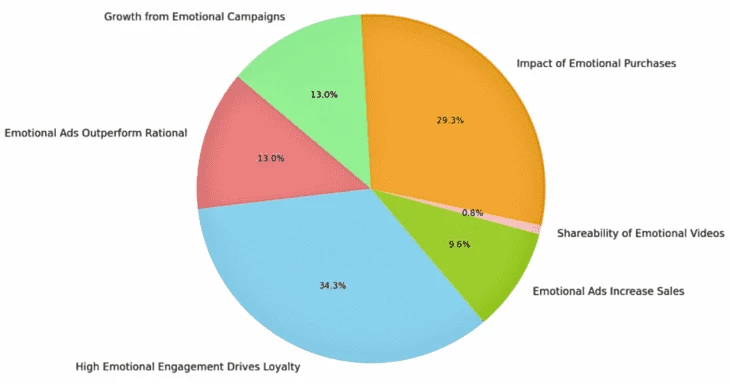
Distribution of emotional marketing effectiveness (source: Amra & Elma)
Emotions have always been decision drivers, whether you like it or not – positive or negative makes little difference to this mechanism. Just pause for a moment and count. How many purchases have you made out of guilt, shame, fear, anger or vanity? We bet it’s more than you’d like to admit.
But we aren’t planning to break down how this near-complete set of deadly sins hijacks your brain or rerun an “Inside Out” cartoon to make the point clearer. This time, we are focusing on the most comfortable feeling marketers lean on when they want you to act willingly. Love.
Love Doesn’t Equal Romance
Love in advertising often gets flattened into romance because that’s the easiest association that comes to mind. Take a couple, seat them for a candlelit dinner and you’ve got yourself a heart-warming atmosphere.

But love comes in many forms, it’s a broader category of emotional bonds tying people to something they care about. Speaking of care – it’s one of those forms, actually – for your parents, partner, kids, pet or house plants. Beings and things you worry about and adjust your life for. Belonging is another one, including friends or communities you don’t want to fall out of. Protection too, in the very practical sense: your home, health, finances or personal data. This form is preventive and focused on keeping everything that matters intact. And underneath all of it – love as identity, reflected in your cultural background, profession, lifestyle and values: “I am this kind of person and people who share the same mindset live in a certain way”. Self-love, which implies choosing things that don’t fight who you already are, also falls into this category.
The point is, once you build those bonds into your ads, you’ll lower the resistance for your audience and their choices start feeling safer and more natural.

Love Doing Its Job in Real Campaigns
Some love-filled ad examples are pretty obvious, like Coca-Cola and their campaigns full of togetherness and spending quality time with your favourite people sipping this refreshing drink. Or those recipe ads you always stumble upon on the internet with click-bait and rather cheesy (pun intended) titles like “Now my husband begs me to cook this for him!”, which also use love as their emotional anchor. You know, if you think about it, almost all food-related ads are running on some form of love. Maybe there’s a reason the path to someone’s heart allegedly goes through the stomach. Damn, even McDonald’s slogan is “I’m LOVING it!”

Someone please stop us before we spiral into a thousand more edible examples and this article never ends. Instead, let’s shake things up a bit and look at some less transparent cases.
One of the most touching examples of love used without romance is Procter & Gamble’s “Thank You, Mom” campaign they ran during the Olympic Games. Not gonna lie, the author of this article got a little misty-eyed while analysing this commercial.

This ad doesn’t even have product shots – just mothers, over years, doing the unglamorous, repetitive work of raising athletes. They wash uniforms, pack bags, wait on cold benches and show up again and again. The campaign doesn’t tell you to love your mom, it assumes you already do and puts the brand inside that existing bond. It’s love as care and identity, too – not only “this is my mom”, but “this is who I am because of her”.
Another good example of using love in advertising is a long-running “Real Beauty” campaign by Dove, launched back in 2004. They’ve been featuring women of different ages and body types to challenge the narrow standards that had dominated beauty marketing for decades. Since then, the brand has been coming up with various initiatives to prove their point, one of the most famous being the “Real Beauty Sketches” experiment. Women described their own appearance to a forensic sketch artist and then strangers described those same women. The two portraits were placed side by side. As you might have already guessed, the versions based on the strangers’ descriptions looked softer and more accurate.

The message was clear. Women usually judge themselves more harshly than others do. Dove revealed that perception gap and made love work as identity and self-acceptance – you are not expected to be better, you are already enough, just see yourself differently.
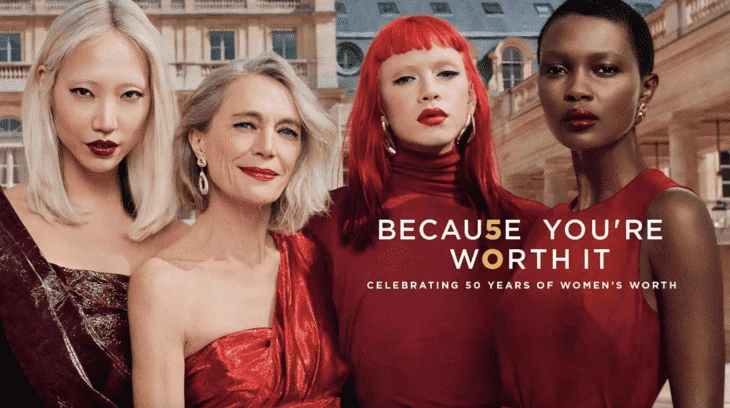
Of course, Dove didn’t invent the idea of boosting customer confidence. L'Oréal Paris has been repeating “Because You’re Worth It” for more than 50 years now. Read it again with a better eye: that’s self-love packaged as permission to spend. Are you starting to notice the pattern?

We just saw how ads motivate people to love themselves and take good care of their bodies and appearance, but love also shows in how we look after others. And not just people. Pedigree partnered with Colenso BBDO and Nexus Studios to launch their “Adoptable” campaign: they used AI and machine learning to put actual shelter dogs into their global ads. Thanks to these technologies, basic phone snapshots of locally adoptable pups were transformed into studio-quality, pose-flexible images.
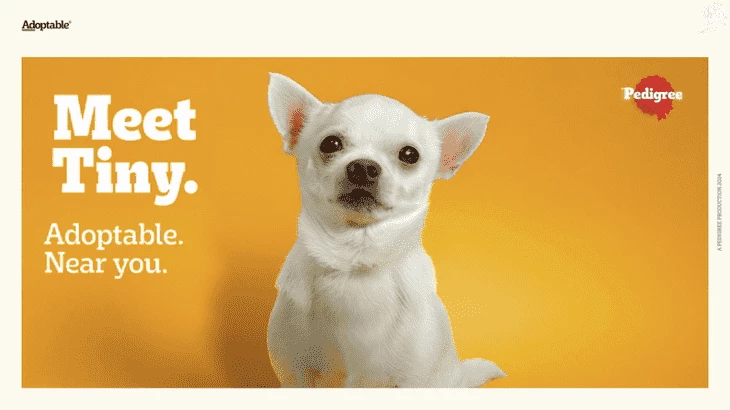
Watch the full case study here, it’s so touching
When one of those dogs found a home, it was removed from rotation. The results were immediate: shelter site visits went up 6 times and about half of the featured dogs were adopted within just a couple of weeks. Better still, the campaign used data and geo-targeting to match breeds and households more likely to be good fits, reducing the risk of dogs being returned to shelters later. This is love as care, responsibility and helping beings in need.
But struggle isn’t automatically tragic. It can be resistance on the way to growth. And when millions of people recognise themselves in that resistance, it becomes a shared bond. No one speaks about this better in advertising than Nike.
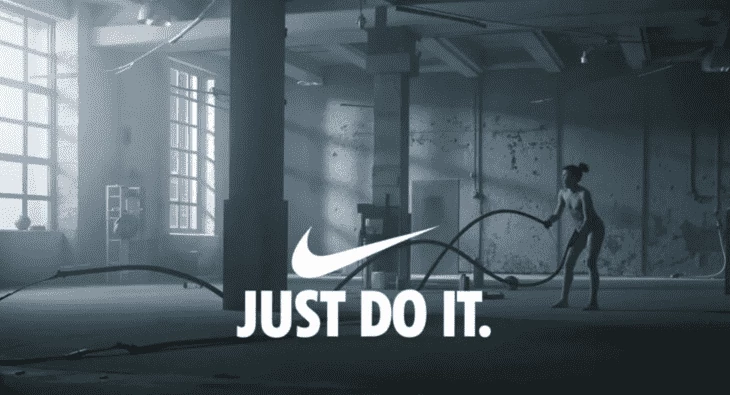
Their famous “Just Do It!” campaigns show people battling the voice in their head that says they can’t, reminding us that resilience and self-belief are part of who we are. That sense of belonging they created for athletes, both amateurs and pros, is itself a form of love rooted in values – the daily effort to stay strong and healthy.
And finally, love’s most passionate form – sex. This isn’t some dark secret. Sex is bold, provocative and has a long and proud history of making people stare at ads longer than planned.
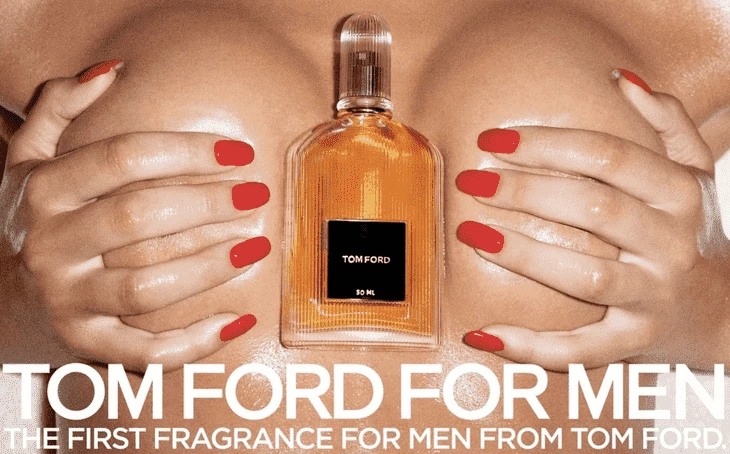
We’ll only show one example here, but feel free to do your own research later. Just tap “sex appeal in advertising” into the Google search bar and let the images do the talking.

Turning Love Into Angles
We’ve looked at how big brands lean on different forms of love to sell everything from soap to sneakers. Now let’s bring it back to our world. Luckily, the mechanics here are much simpler. As affiliate marketers, it’s not our job to reinvent products or offers. What we can do is reframe the way we present them. Let’s rewrite some popular CTAs together, with love:
Nutra and Wellness
Love as care and self-respect:
Lose weight fast → Feel comfortable in your own skin again
Anti-aging formula → Make your beauty last on your own terms
Detox cleanse → Give your body the reset it deserves
Boost testosterone → Show up with the energy you expect from yourself
Finance and Investing
Love as protection and responsibility:
Higher yield → Safeguard the future you are building
Passive income → Spend time with your family instead of worrying about the next paycheck
Insurance plan → Shield what you’ve already earned
Retirement fund → Make sure your loved ones don’t have to step in
iGaming
Love as belonging and identity:
Big bonuses → Join the players who know how to play smart
Spin and win → Feel the thrill of testing your instincts
VIP access → Be part of the inner circle
Bet now → Play like the strategist you’ve become
Dating
Love as connection and self-worth:
Find hot singles → Meet someone who actually gets you
Swipe now → Stop wasting time on the wrong people
Upgrade to premium → Give yourself a real chance at something meaningful
Casual fun → Feel wanted again
Serious relationship → Build a long-lasting bond
Education and Self-Development
Love as growth and self-alignment:
Learn coding → Build skills your future self will thank you for
Language course → Open doors you couldn’t before
Career training → Become the professional you respect
Productivity app → Honour your time and energy
Travel
Love as connection and memory-making:
Cheap flights → Visit the people you’ve missed
Luxury resort → Experience the comfort you’ve earned
Last-minute deal → Say yes to the memories
Adventure tour → Create stories worth telling
Solo travel → Spend time with yourself
E-commerce
Love as environment and everyday care:
Limited offer → Grab it before it’s gone from your routine
Premium product → Surround yourself with things that match your standards
Top-tier materials → Invest in durability instead of replacements
Buy 1, get 2 → Stock up for the people you care about
Delivered to your door → Make life a little easier this week
Best seller → See what people with your taste are choosing
Conclusion
So no, this article wasn’t a Valentine’s special. We just wanted to remind you that most buying decisions are less logical than they seem. People protect what they care about. They align with who they think they are. And they move toward what feels familiar and safe. You can keep selling benefits, discounts, urgency and dopamine hits like everyone else. Or you can add some love to your campaigns and see how it changes everything. Good luck, our brave cupids!